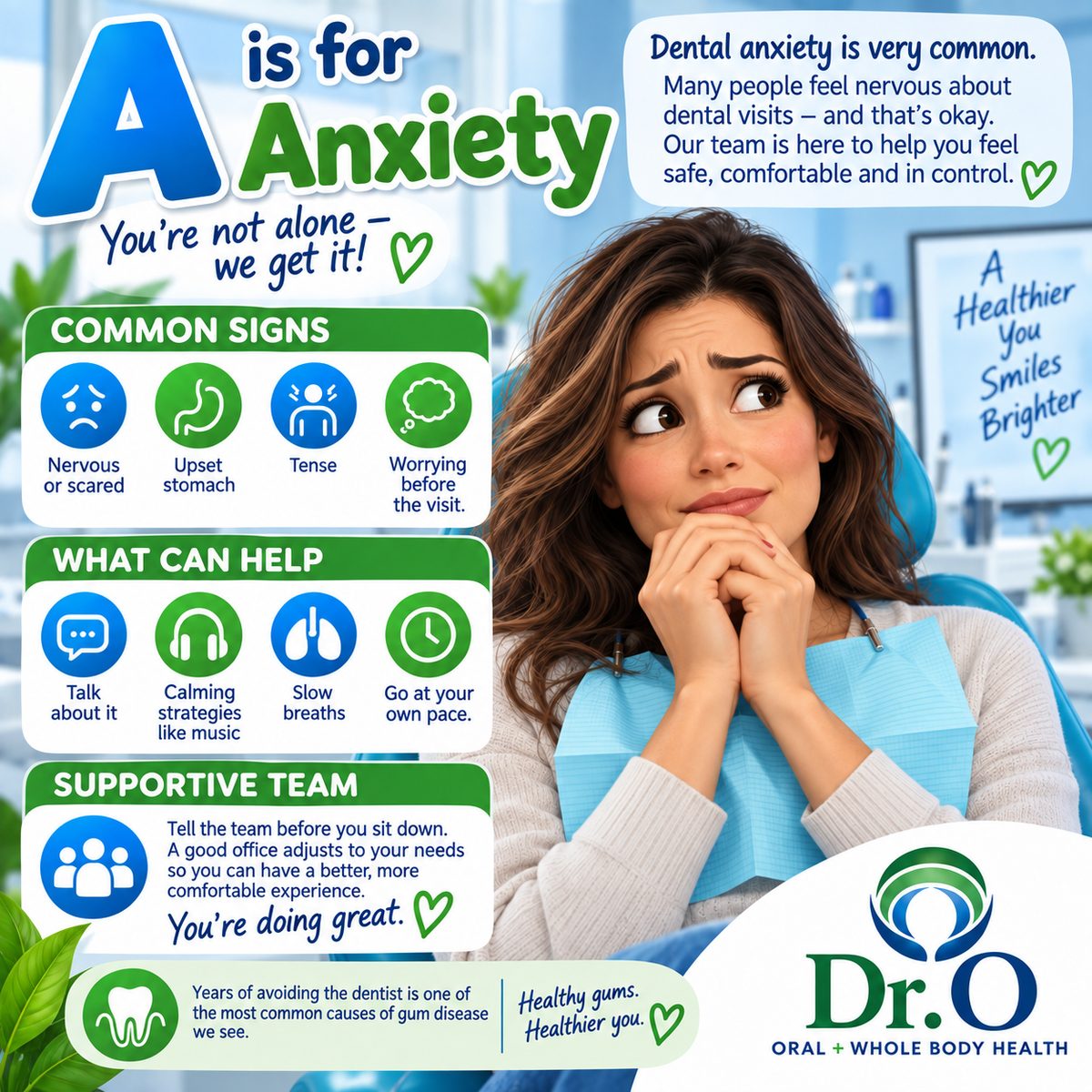
A is for Anxiety
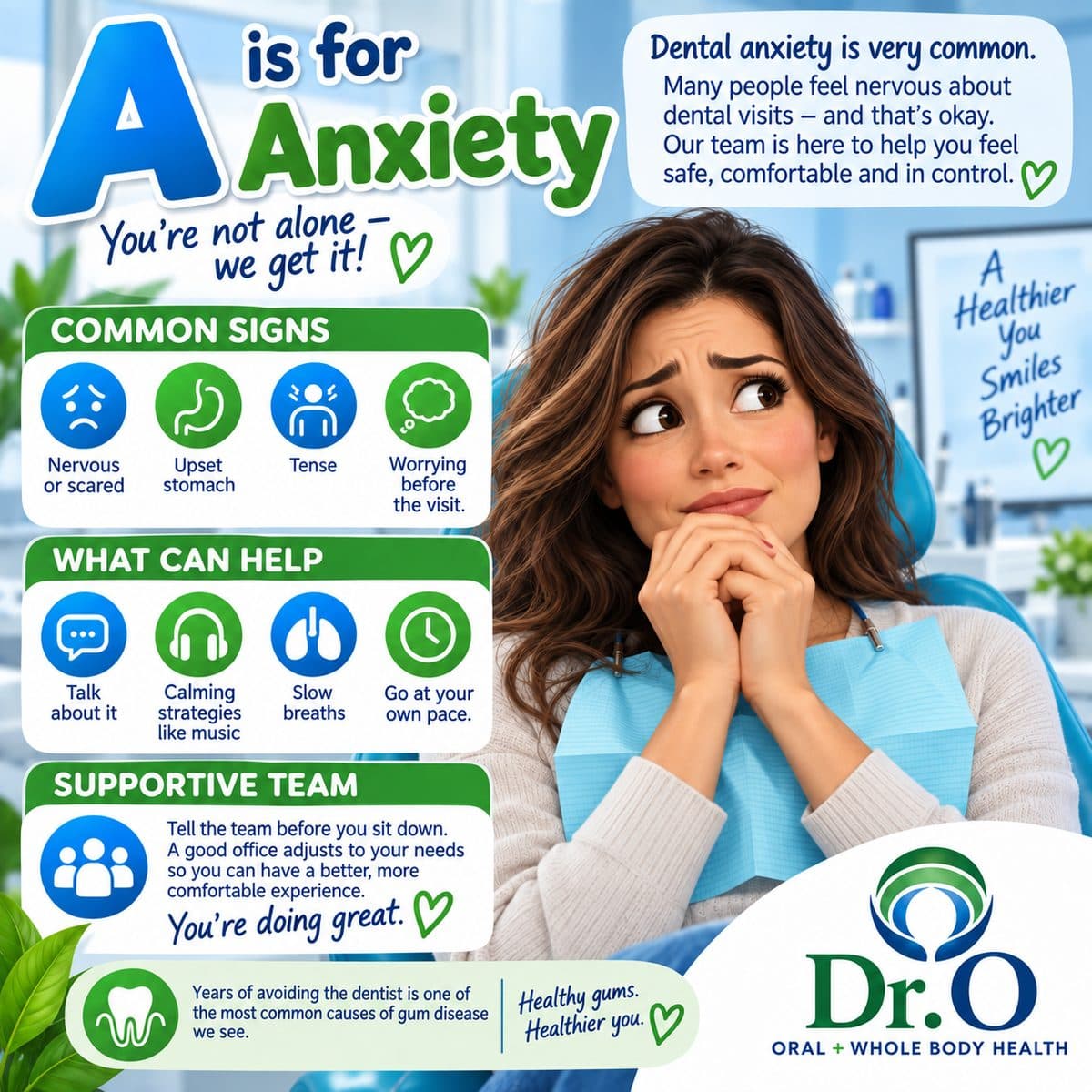
Dental anxiety is a feeling of fear, worry, or uneasiness about dental visits. Some people may feel tense, shaky, embarrassed, or afraid before an appointment, even when they know care is important. A calm explanation, a supportive team, and moving at a comfortable pace can help make dental visits easier.
Dr. O’s Calming Supports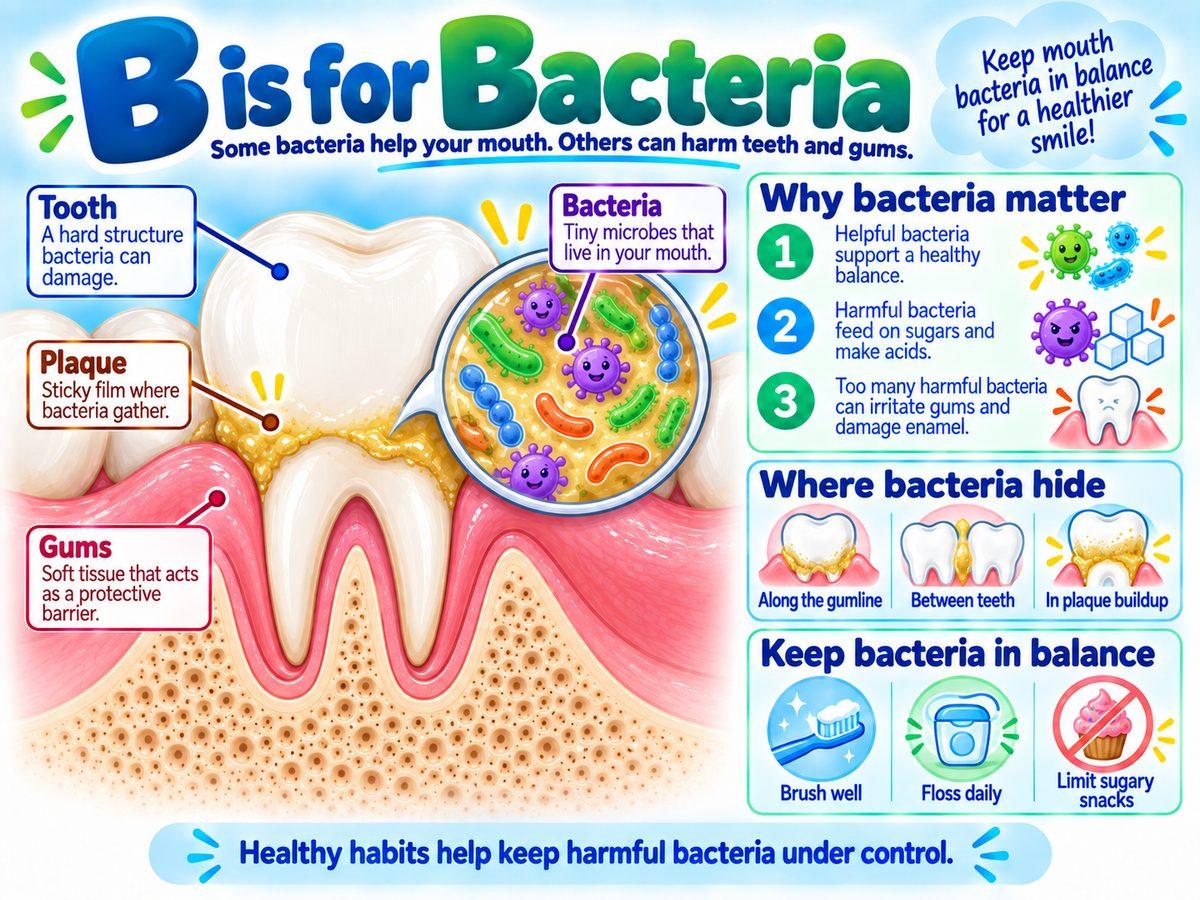
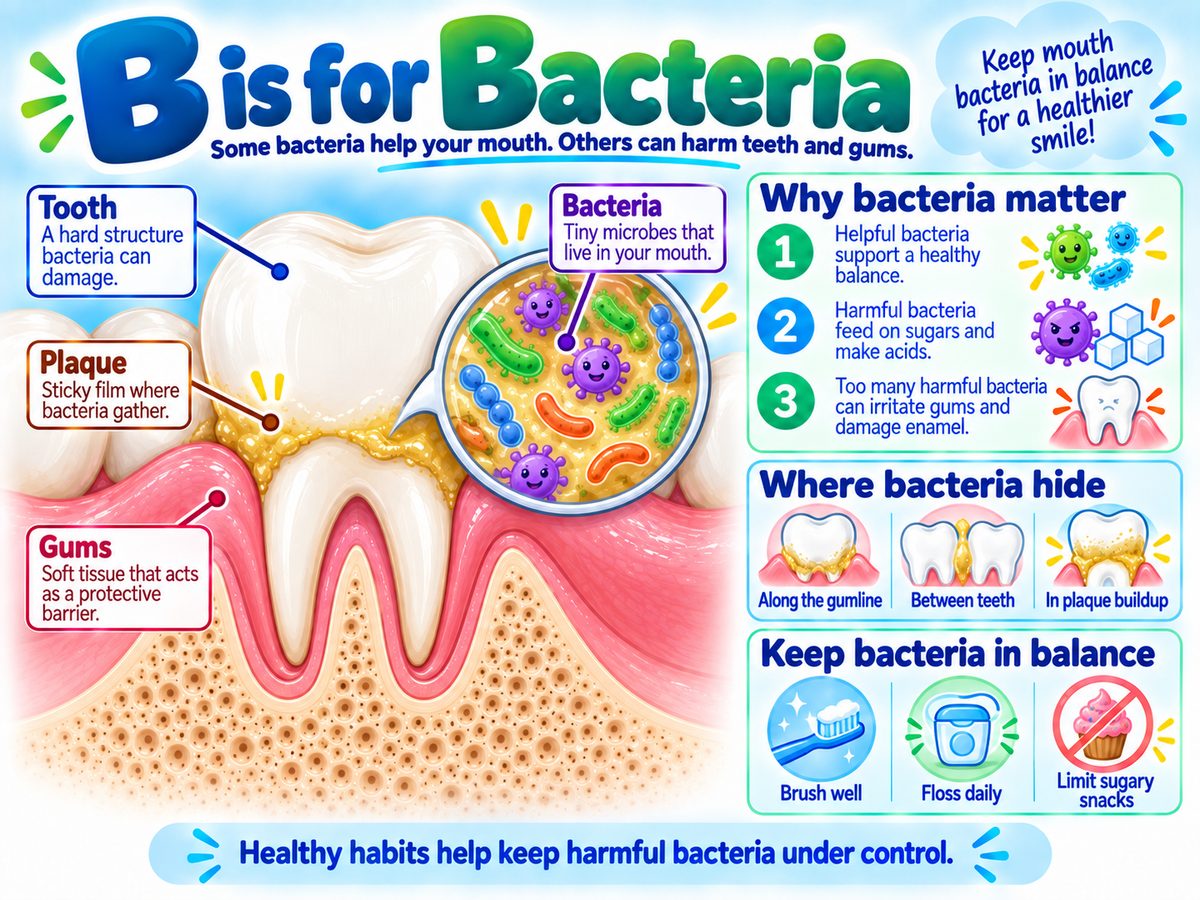
B is for Bacteria
Your mouth contains many kinds of bacteria. Some help support a healthy oral balance, while others feed on sugars, collect in plaque, make acids, and irritate teeth and gums. Brushing, flossing, and limiting frequent sugary snacks help keep harmful bacteria under control.
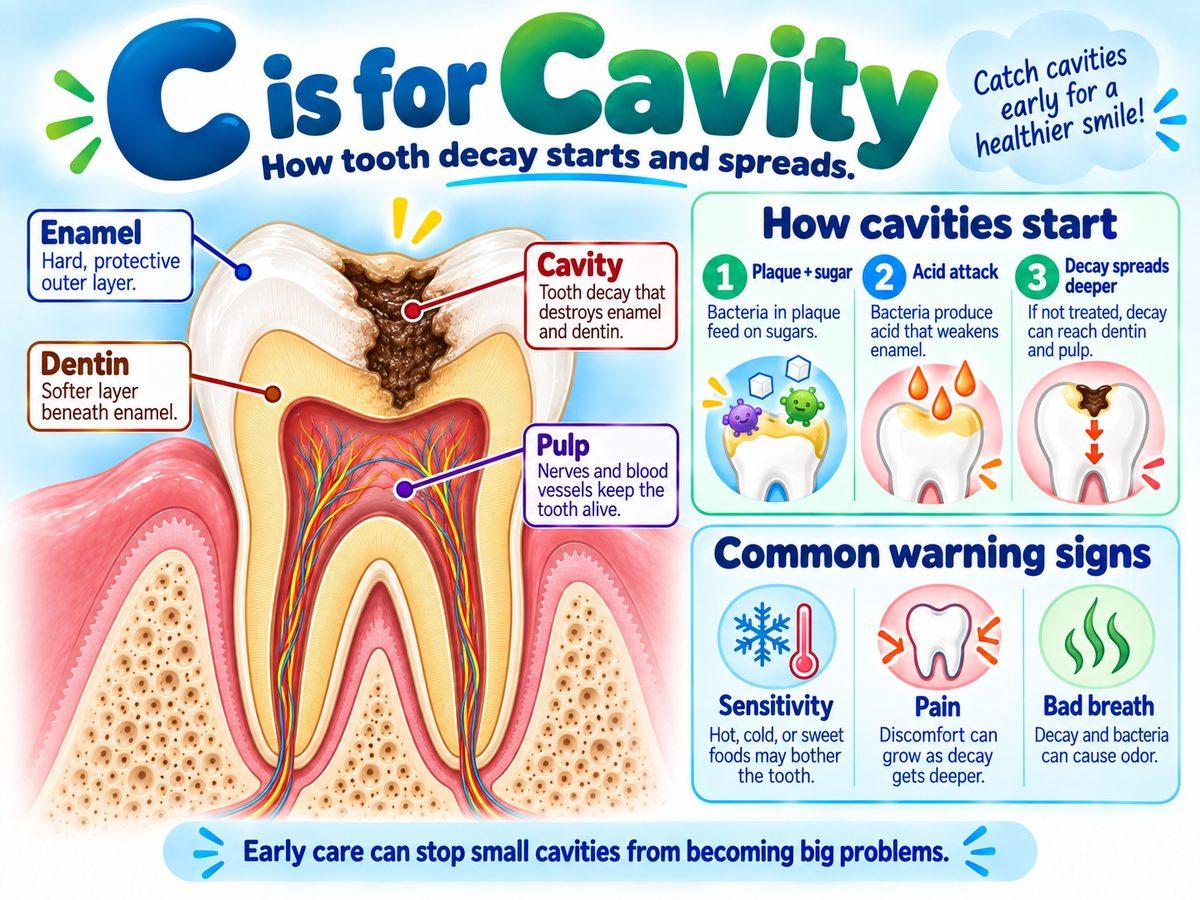
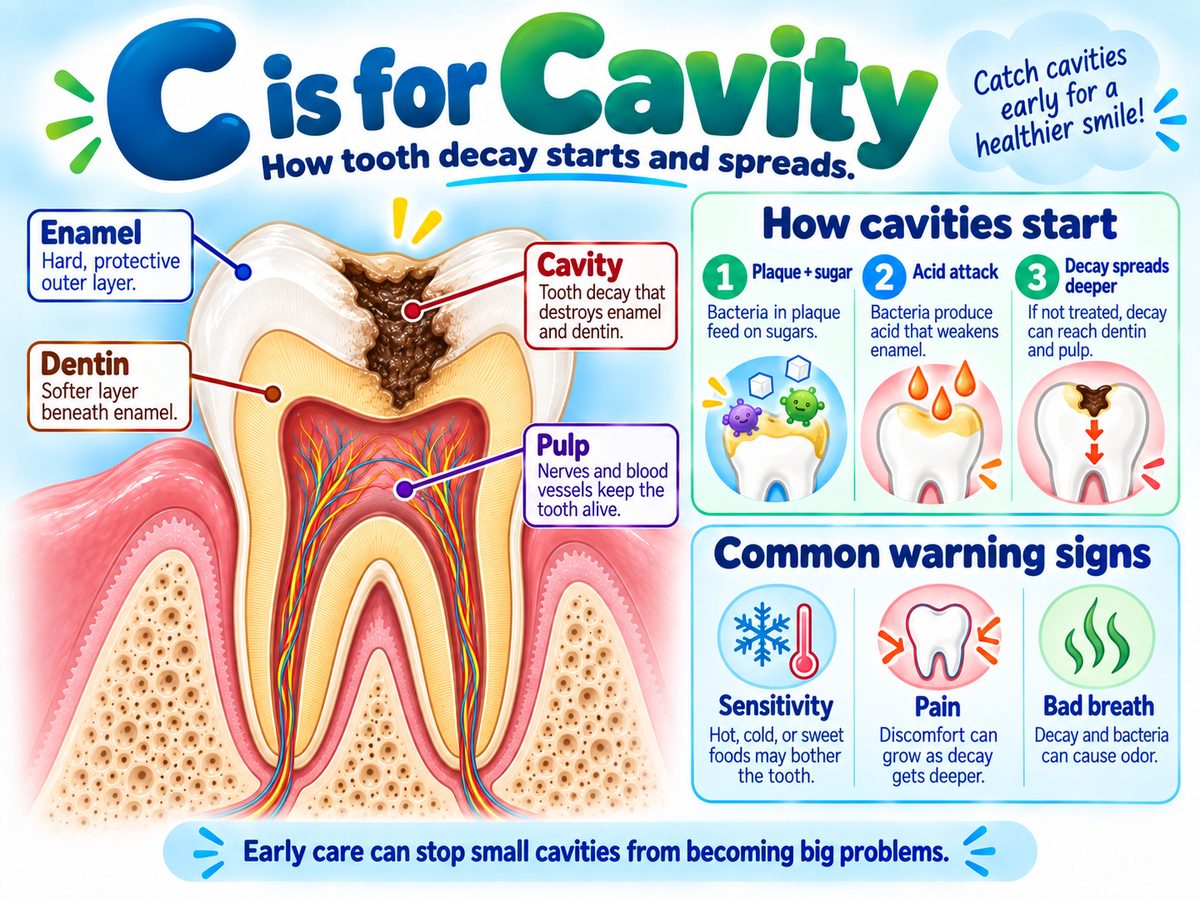
C is for Cavity
A cavity is an area of tooth decay that damages enamel and can move into the softer dentin underneath. It often begins when plaque bacteria feed on sugar and produce acids that weaken enamel. Sensitivity to hot, cold, or sweets, pain, and sometimes bad breath can appear as the cavity gets deeper.
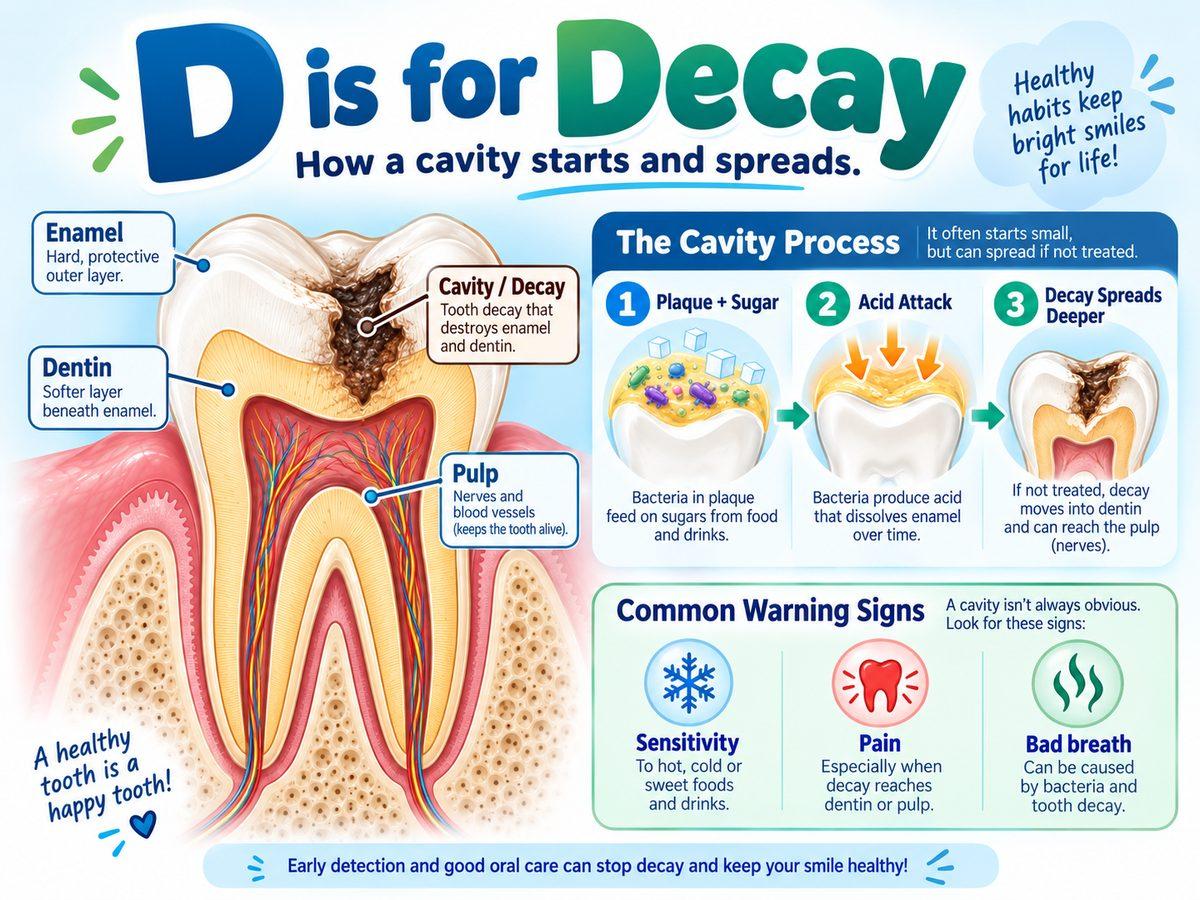
D is for Decay
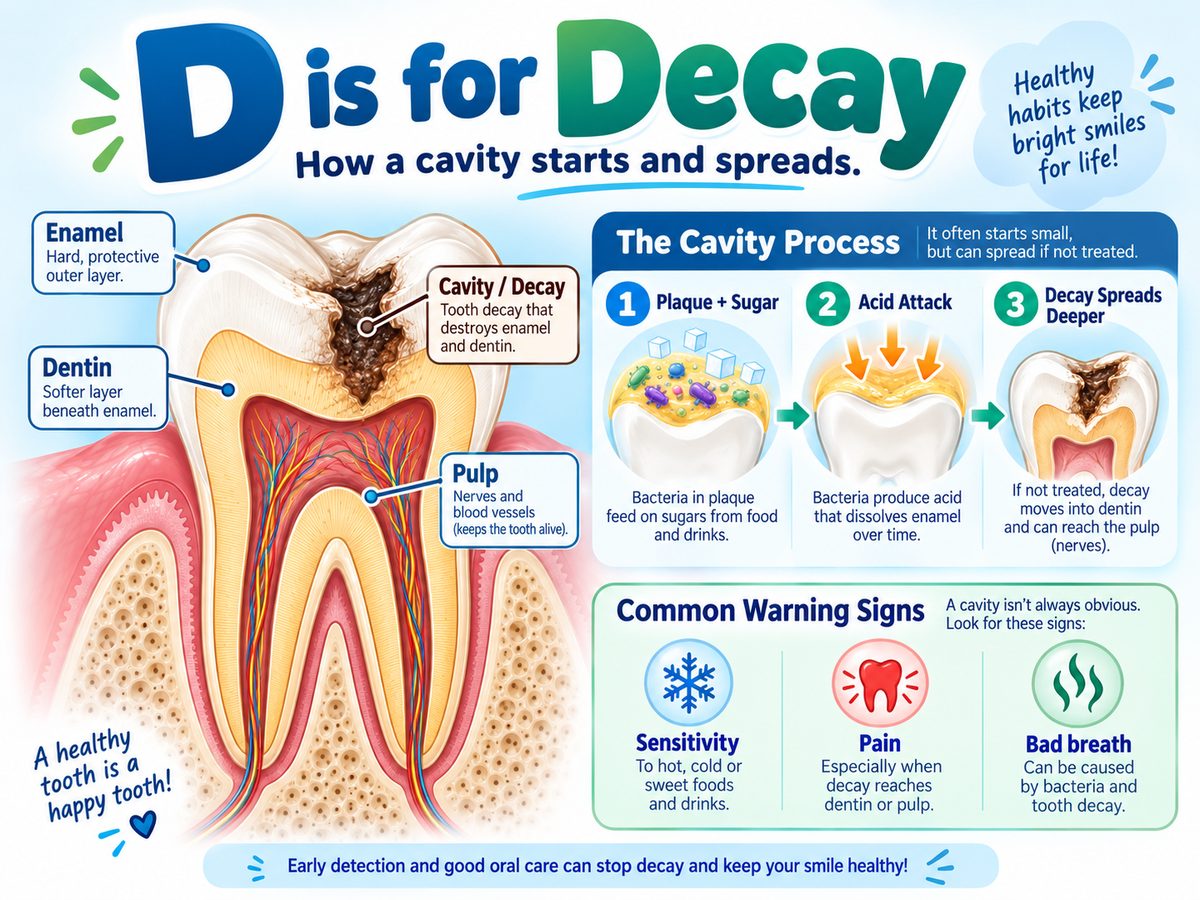
Tooth decay is the process that turns a small weak spot into a cavity. Plaque bacteria use sugars from food and drinks, producing acids that erode enamel; if the process continues, decay can move into dentin and eventually reach the pulp. Early detection and good oral care can stop small problems from becoming much bigger ones.
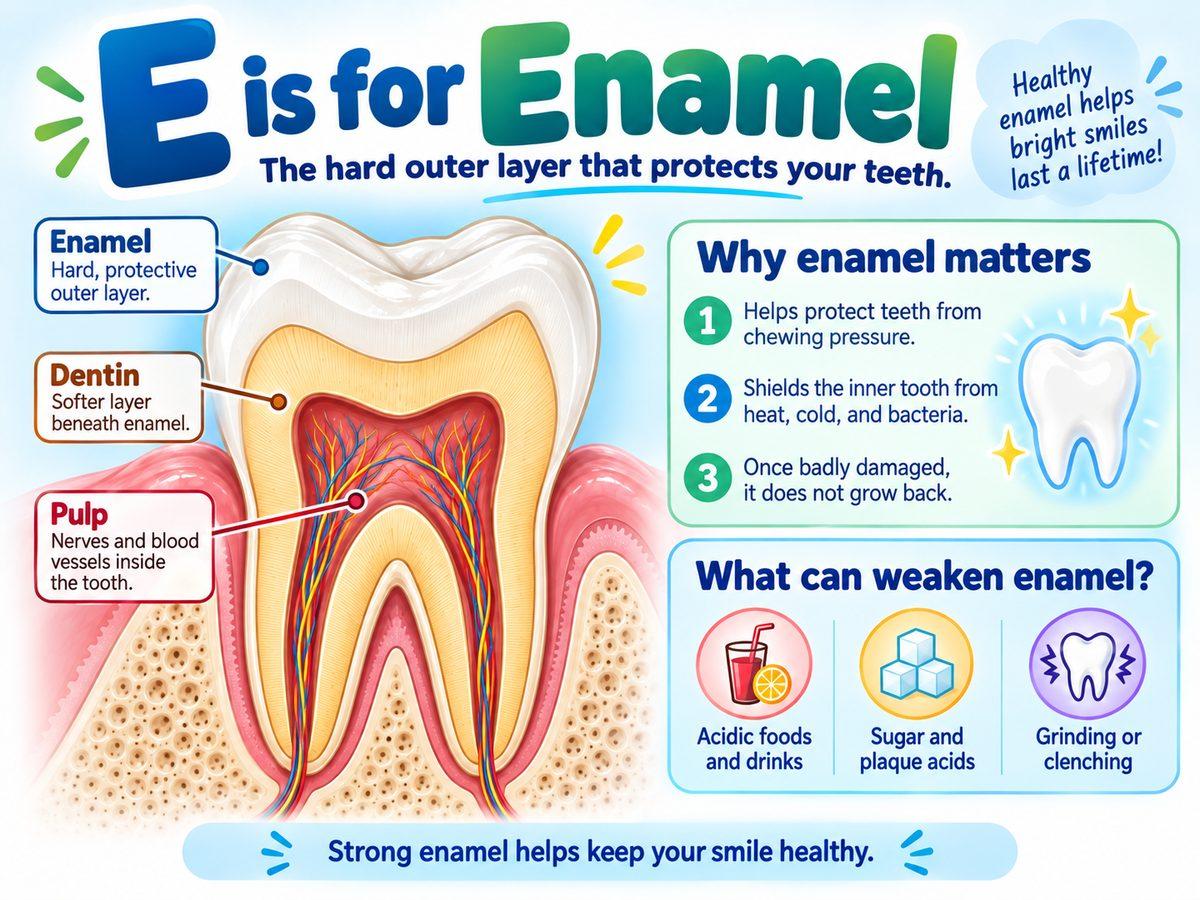
E is for Enamel
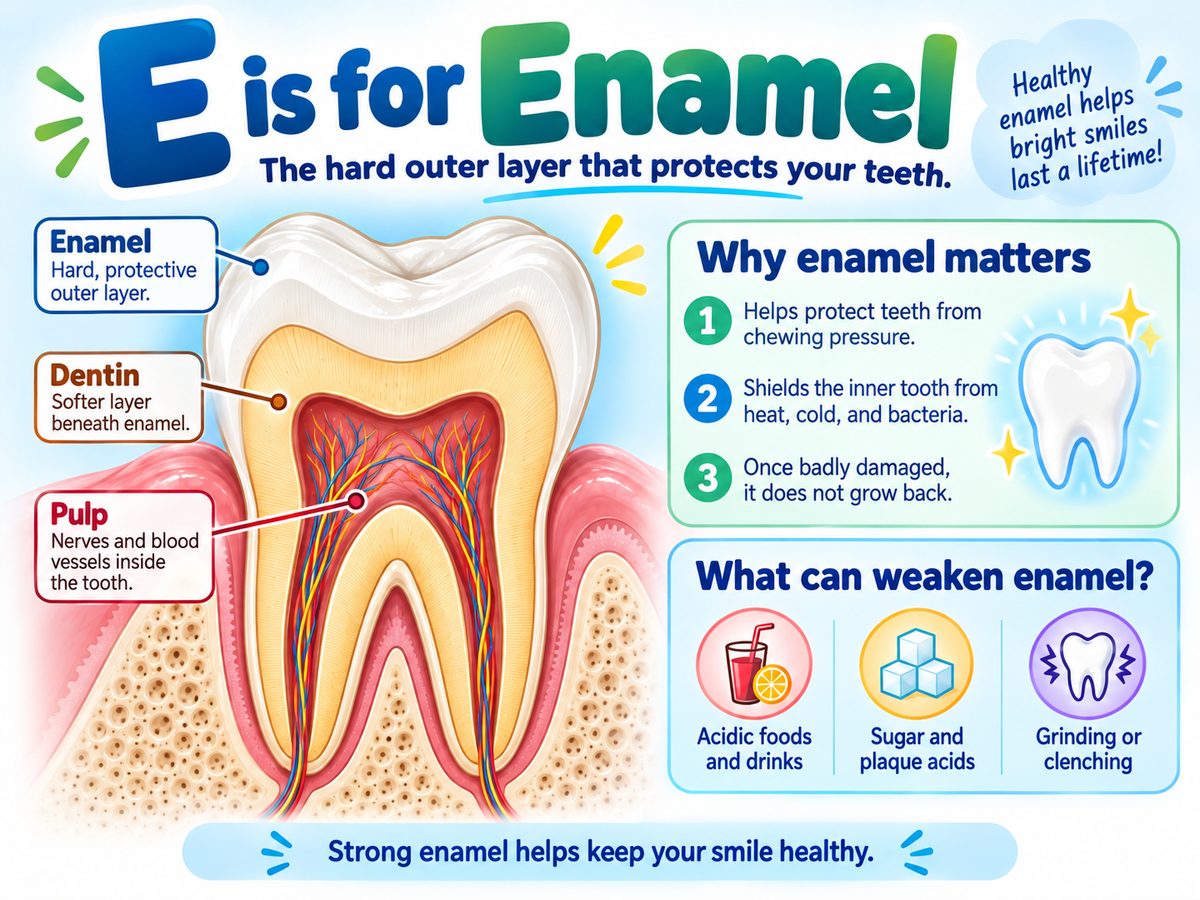
Enamel is the hard outer layer that protects each tooth. It helps shield the inner tooth from chewing pressure, temperature changes, bacteria, and acids. Acidic foods and drinks, sugar and plaque acids, and grinding or clenching can weaken enamel, and once it is badly damaged it does not grow back.
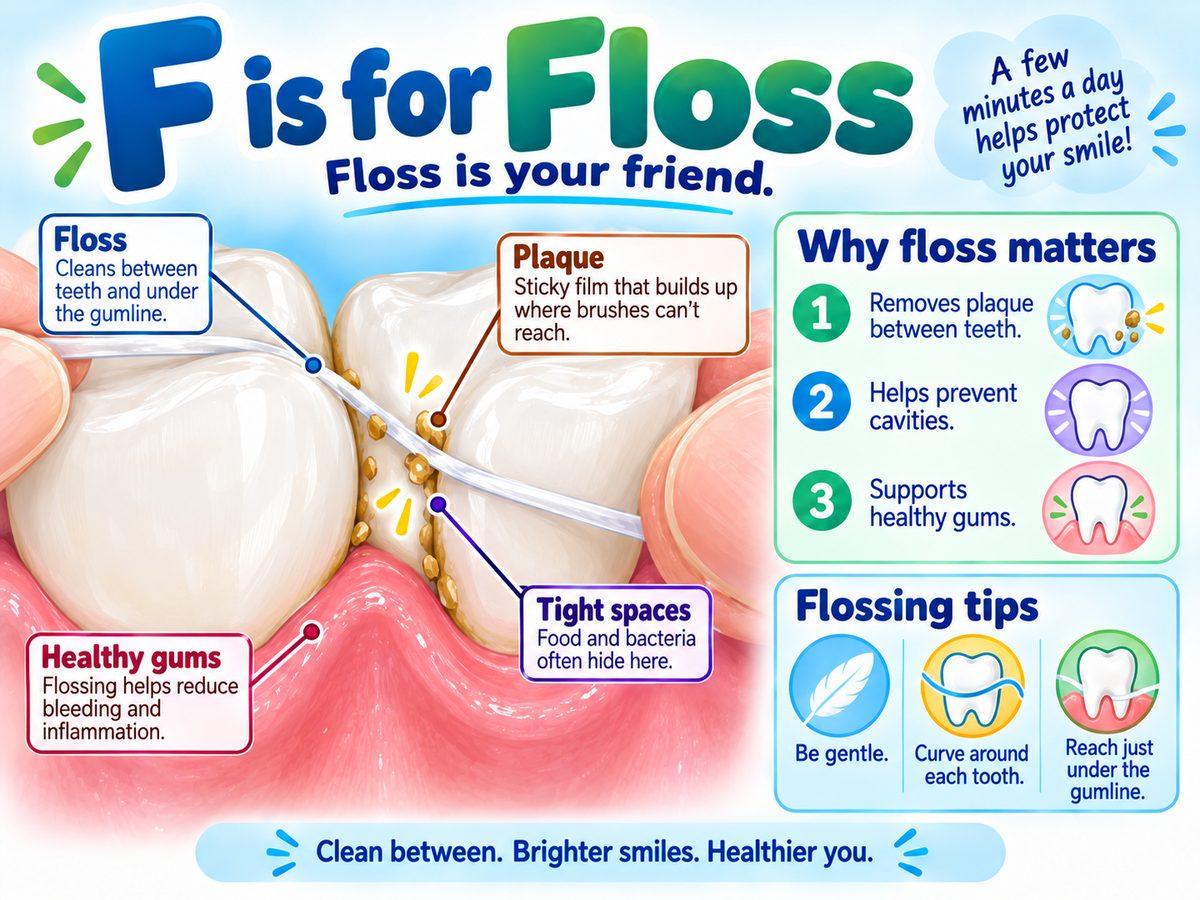
F is for Floss
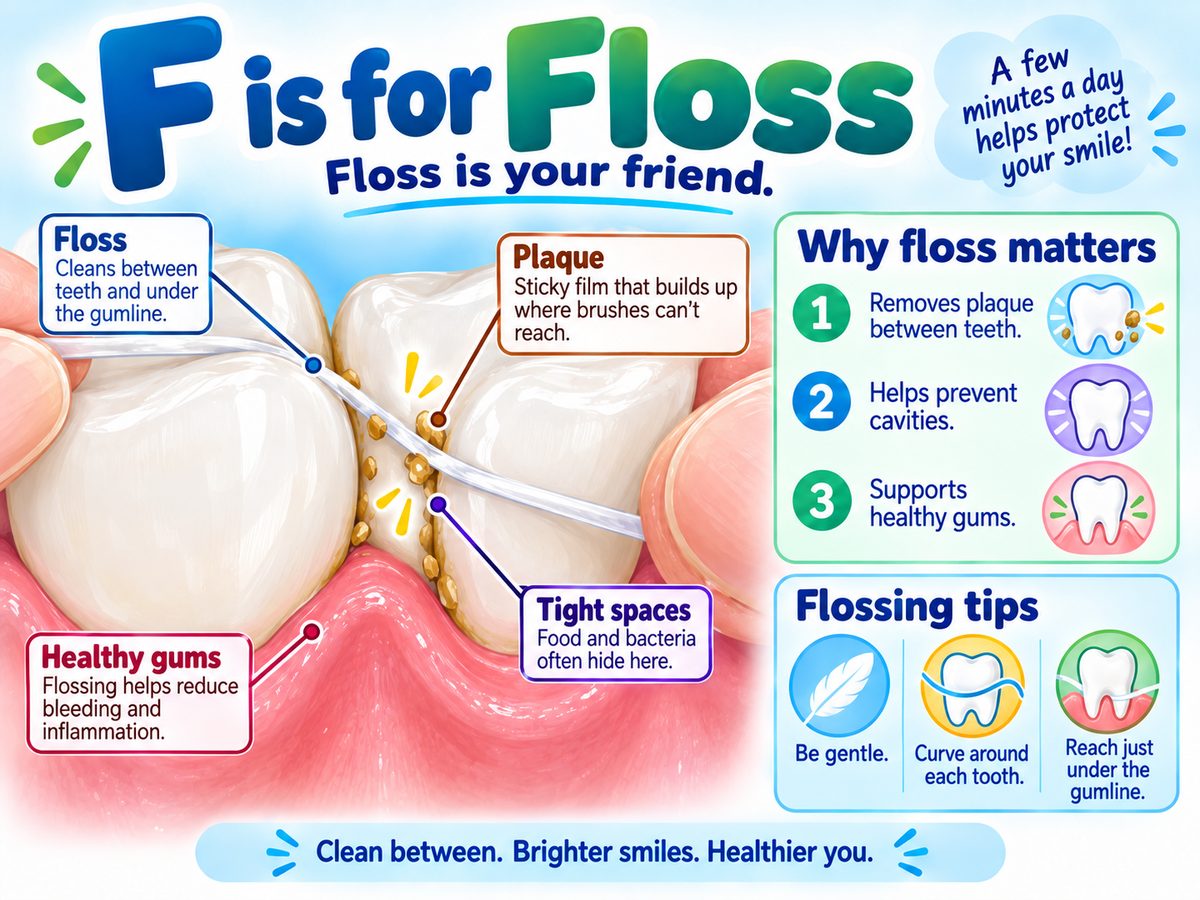
Floss is your friend because it cleans the spaces a toothbrush cannot reach well, between teeth and just under the gumline. It removes plaque and trapped food, helps reduce gum irritation, and supports cavity prevention. The key is to be gentle, curve the floss around each tooth, and reach slightly below the gumline.
OHI Sheet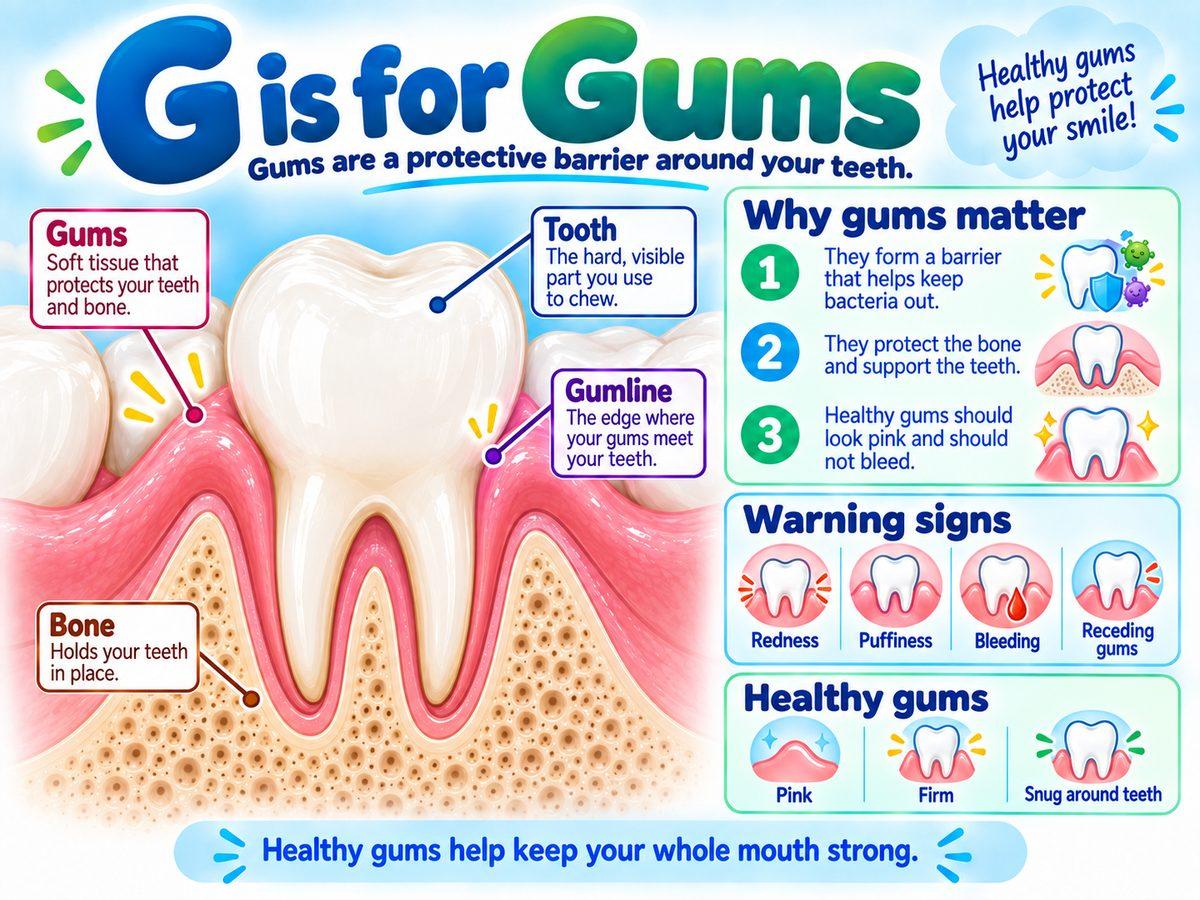
G is for Gums
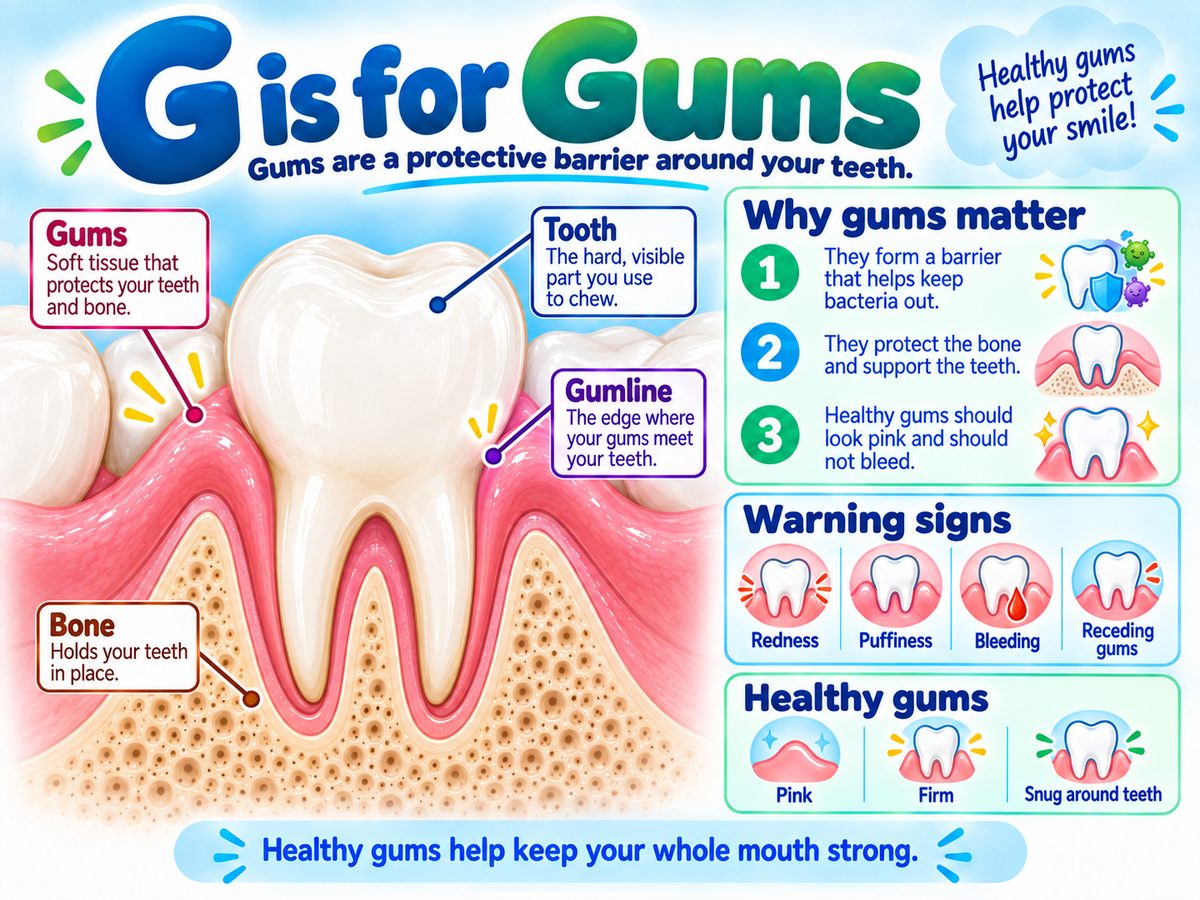
Gums are soft tissues that surround the teeth, protect the supporting bone, and act as an important barrier between the mouth and the tissues underneath. Healthy gums should look pink and firm, fit snugly around the teeth, and should not bleed. Redness, puffiness, bleeding, or recession are signs that the barrier may be under stress.
OHI Sheet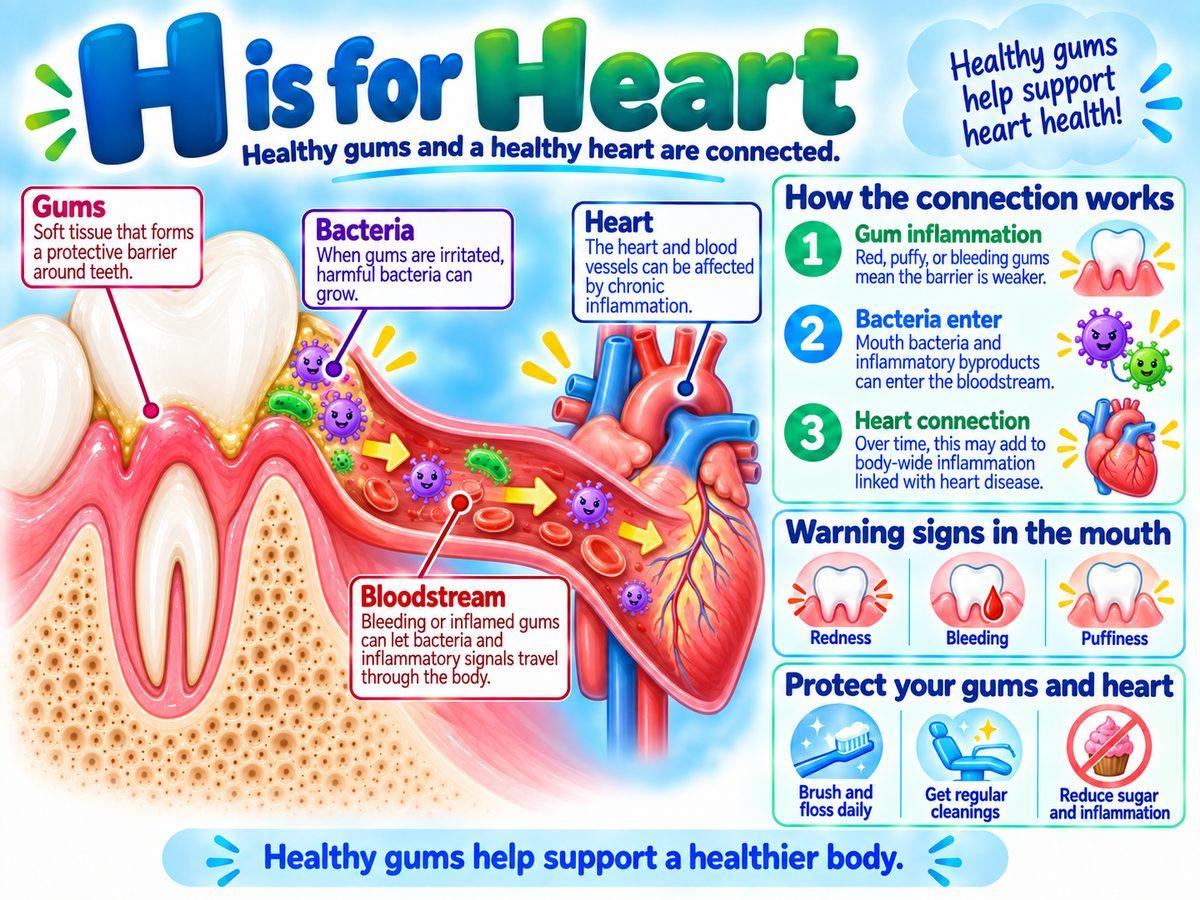
H is for Heart
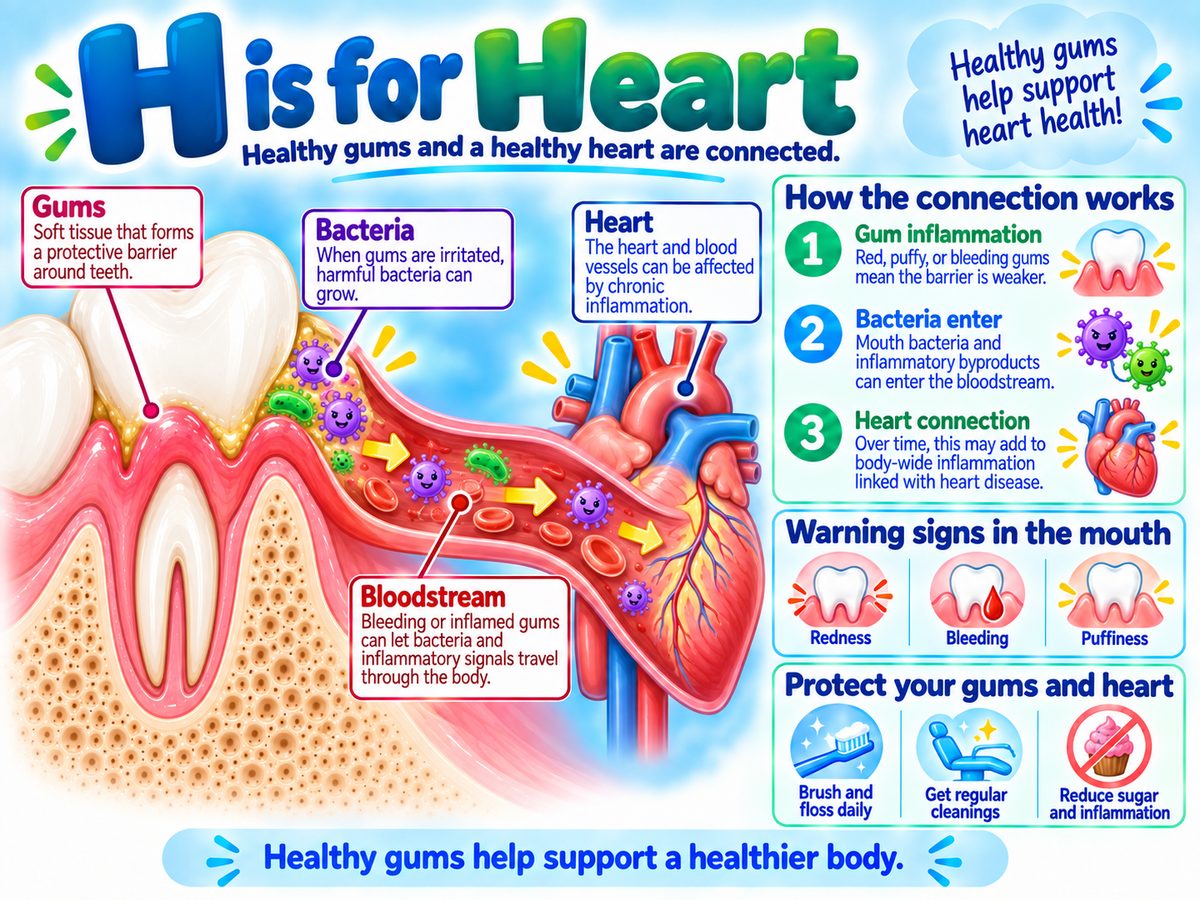
Healthy gums and heart health are connected through inflammation and the bloodstream. When gums are inflamed or bleeding, the protective barrier is weaker and mouth bacteria and inflammatory byproducts can enter the circulation. Over time, this may add to the body-wide inflammatory burden associated with cardiovascular disease.
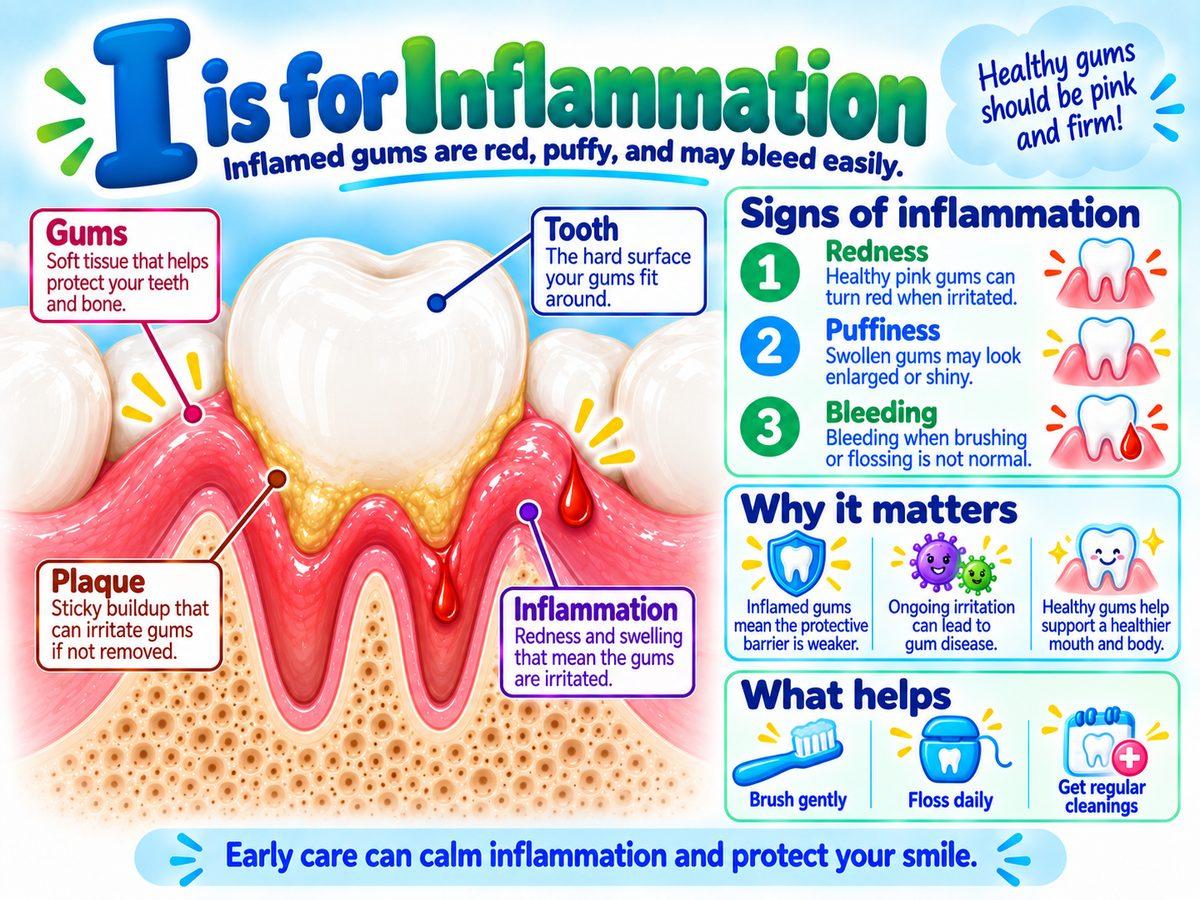
I is for Inflammation
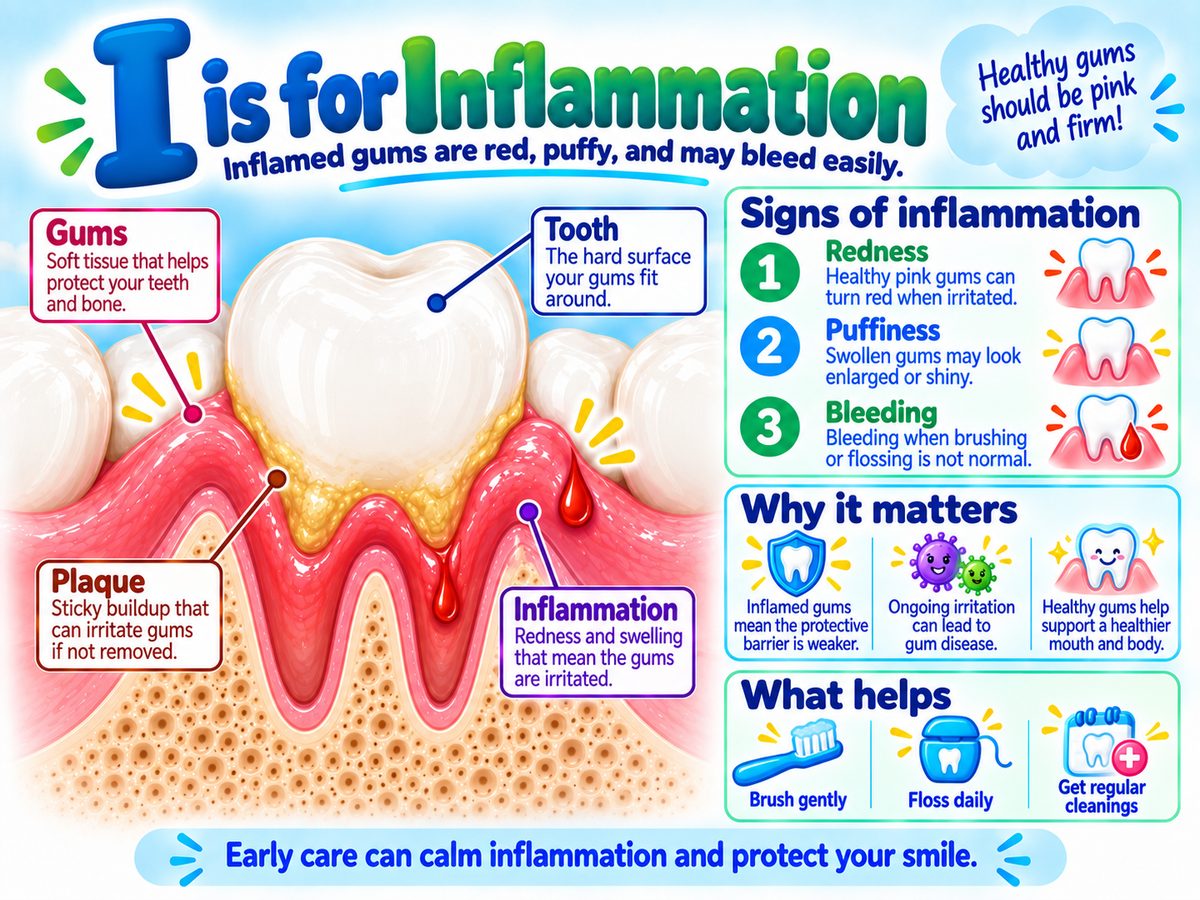
Inflamed gums are typically red, puffy, shiny, tender, or more likely to bleed when brushing or flossing. Plaque buildup can irritate the gum tissue and weaken its protective barrier. Gentle brushing, daily flossing, and regular professional cleanings help calm inflammation and protect the tissues around the teeth.
J is for Jaw
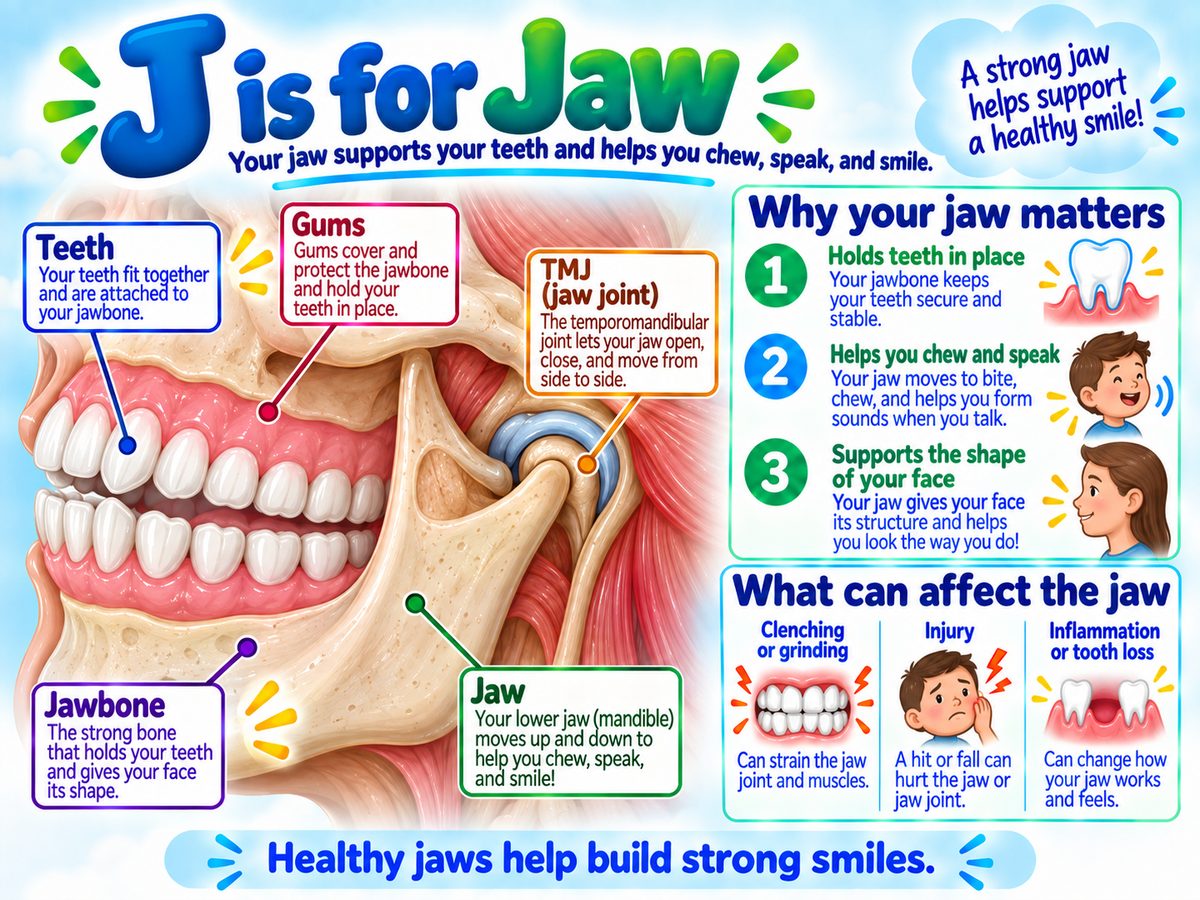
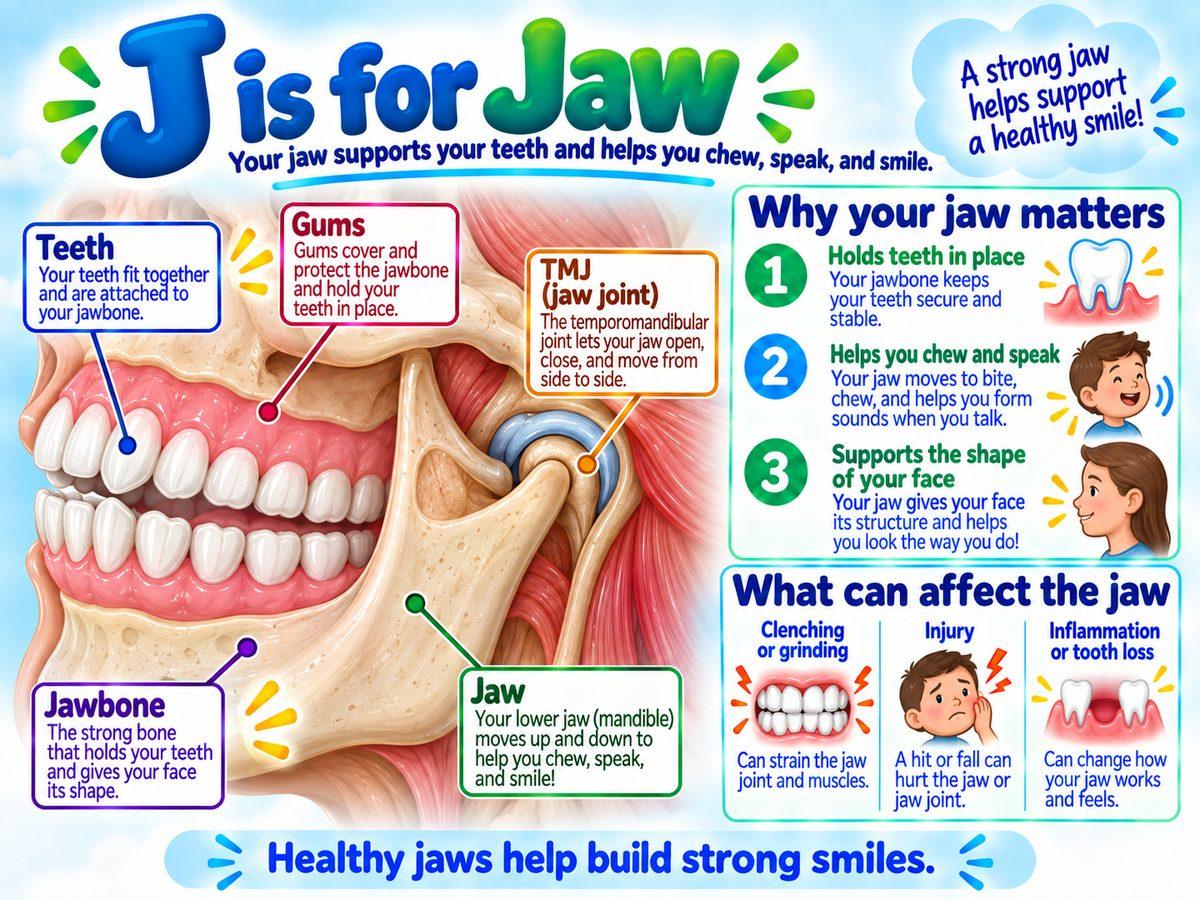
Your jaw supports your teeth and helps you chew, speak, and shape your face. The lower jaw, or mandible, moves at the temporomandibular joint (TMJ) so the mouth can open, close, and move from side to side. Clenching, grinding, injury, inflammation, or tooth loss can all affect how the jaw works and feels.
K is for Kids
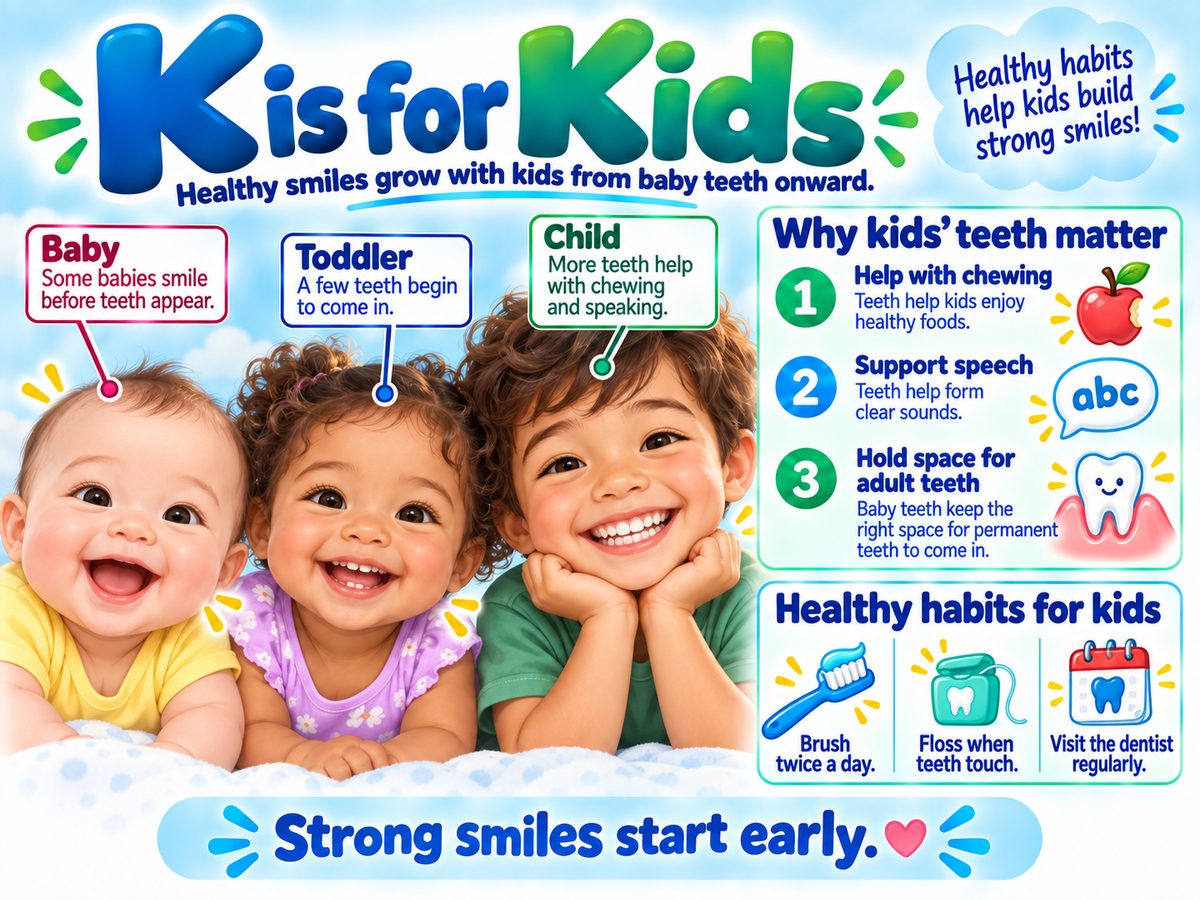
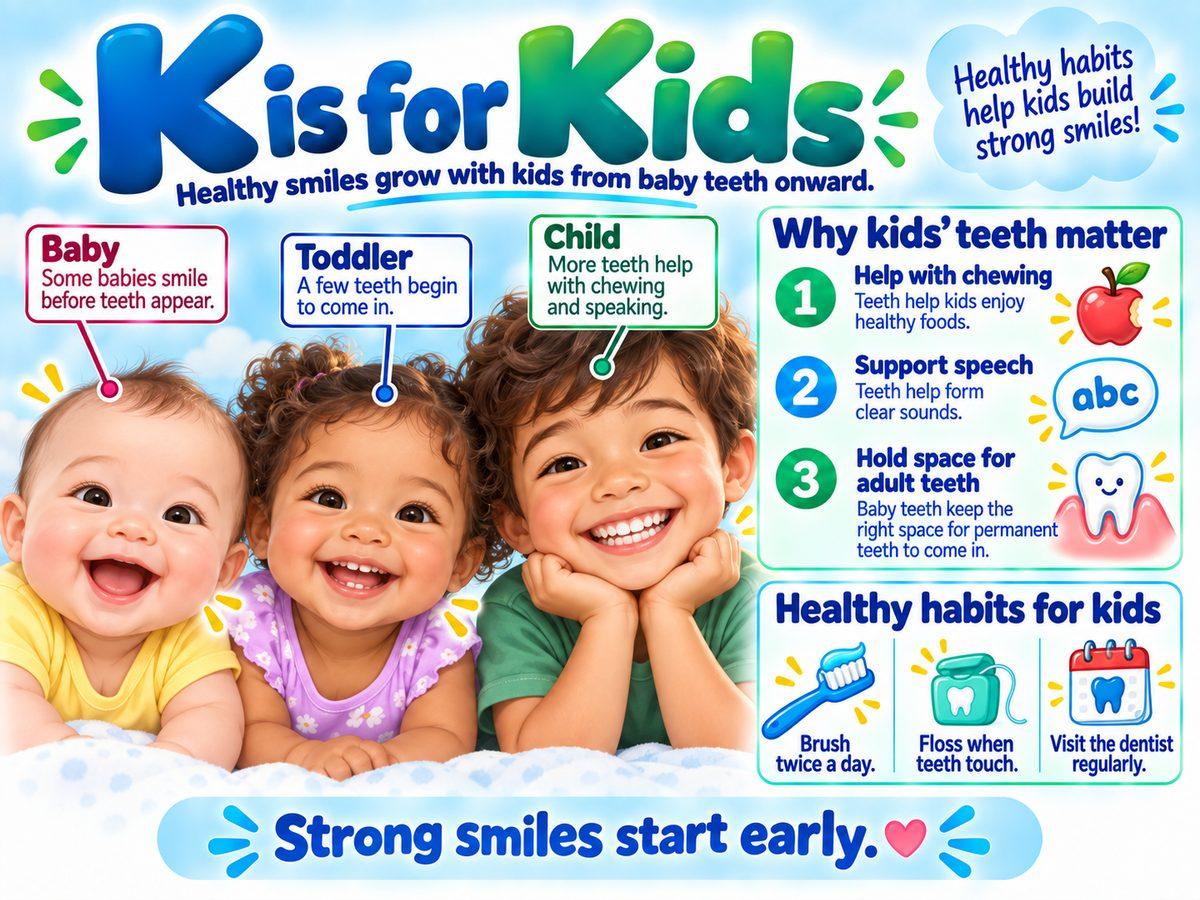
Healthy smiles begin early. Babies may smile before teeth appear, toddlers begin getting a few teeth, and children gradually develop a fuller set that helps with chewing and speech. Baby teeth also hold space for the permanent teeth that follow, so brushing, flossing when teeth touch, and regular dental visits matter from the start.
L is for Loss of Teeth
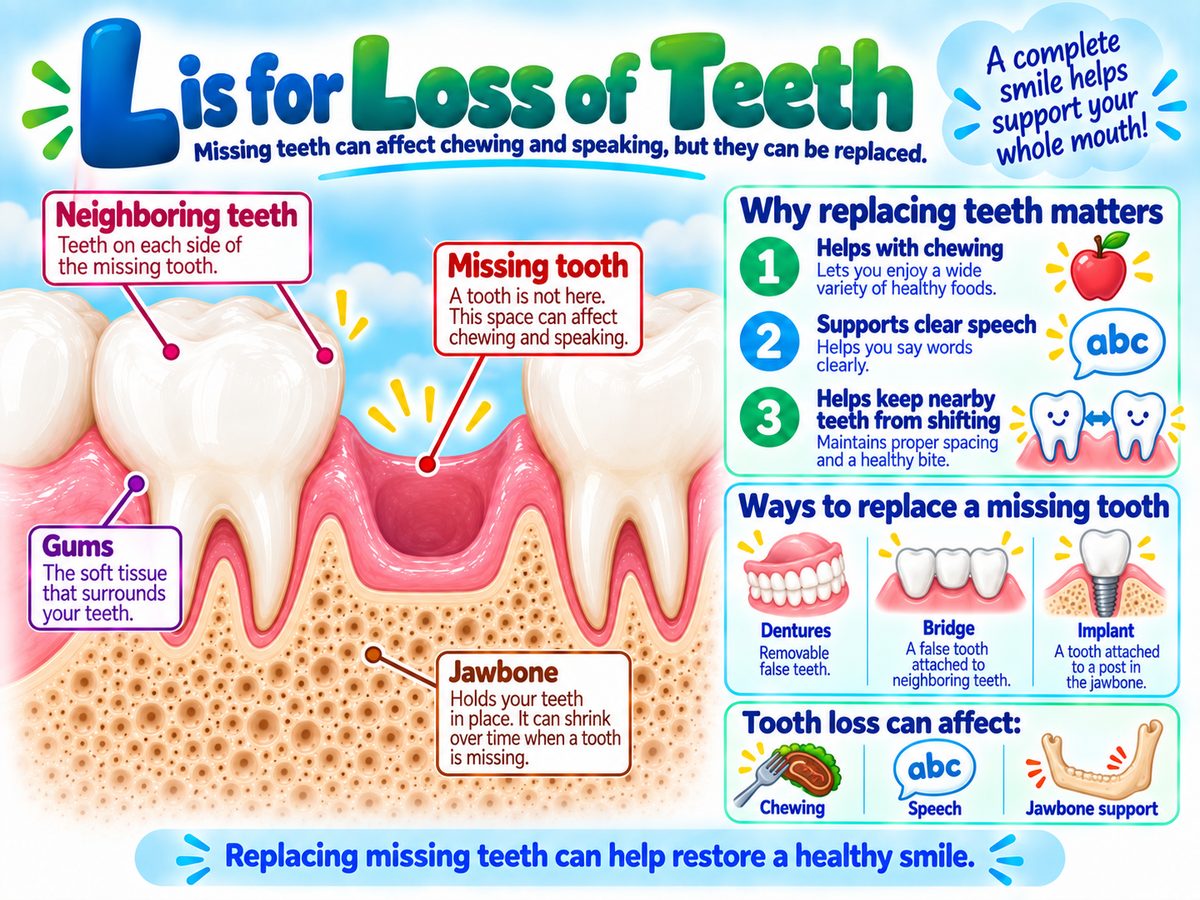
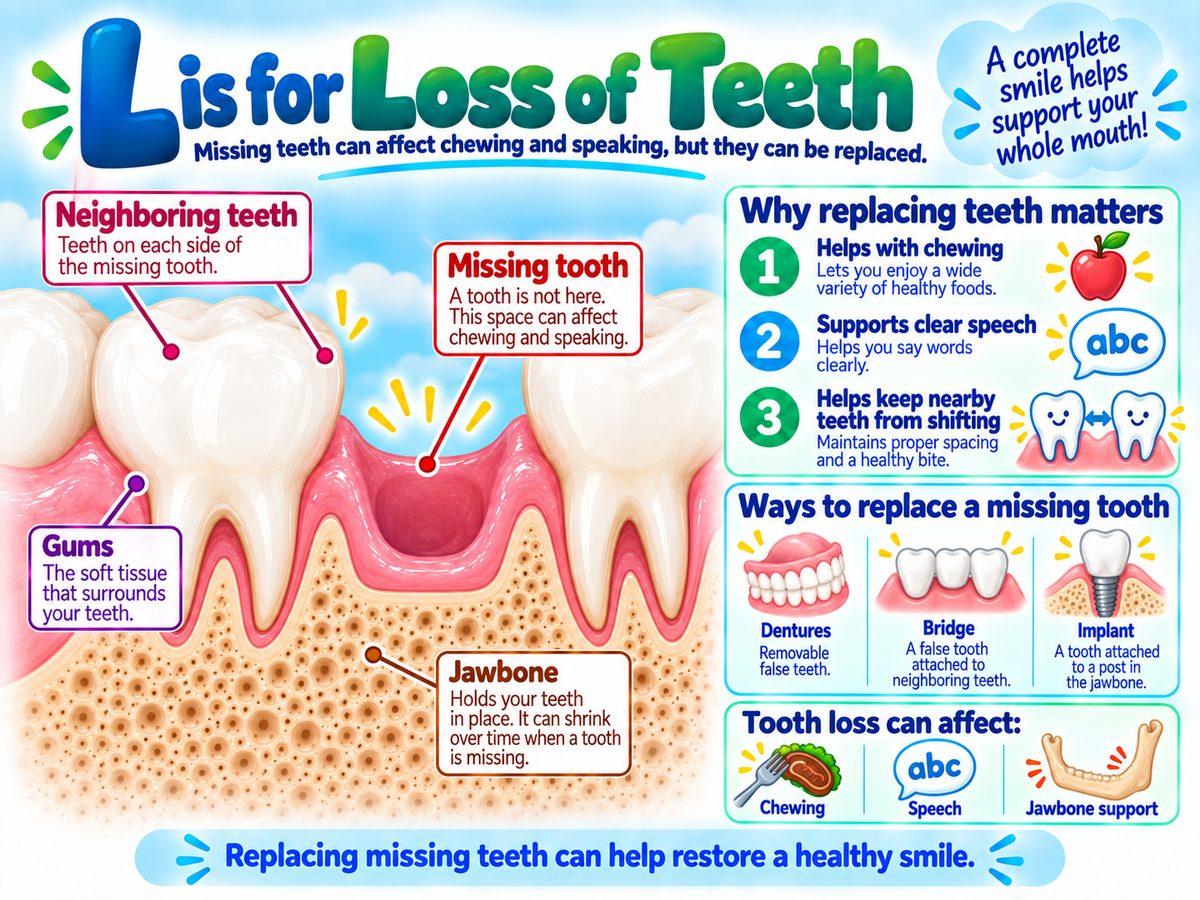
Missing teeth can affect chewing, speech, tooth position, and the jawbone that once supported the tooth. Nearby teeth may drift into the open space, and the bone can shrink over time. Depending on the situation, missing teeth may be replaced with dentures, a dental bridge, or an implant.
M is for Metal Toxicity
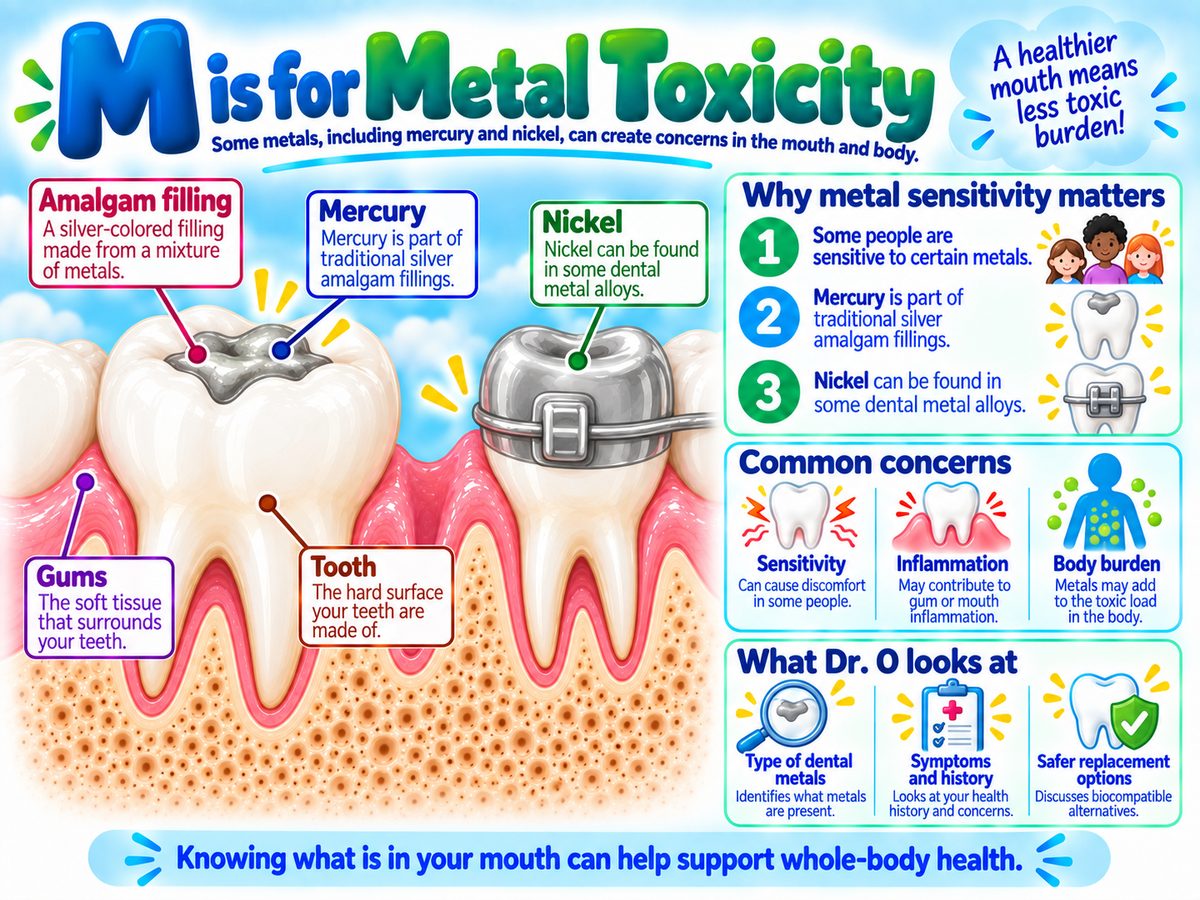
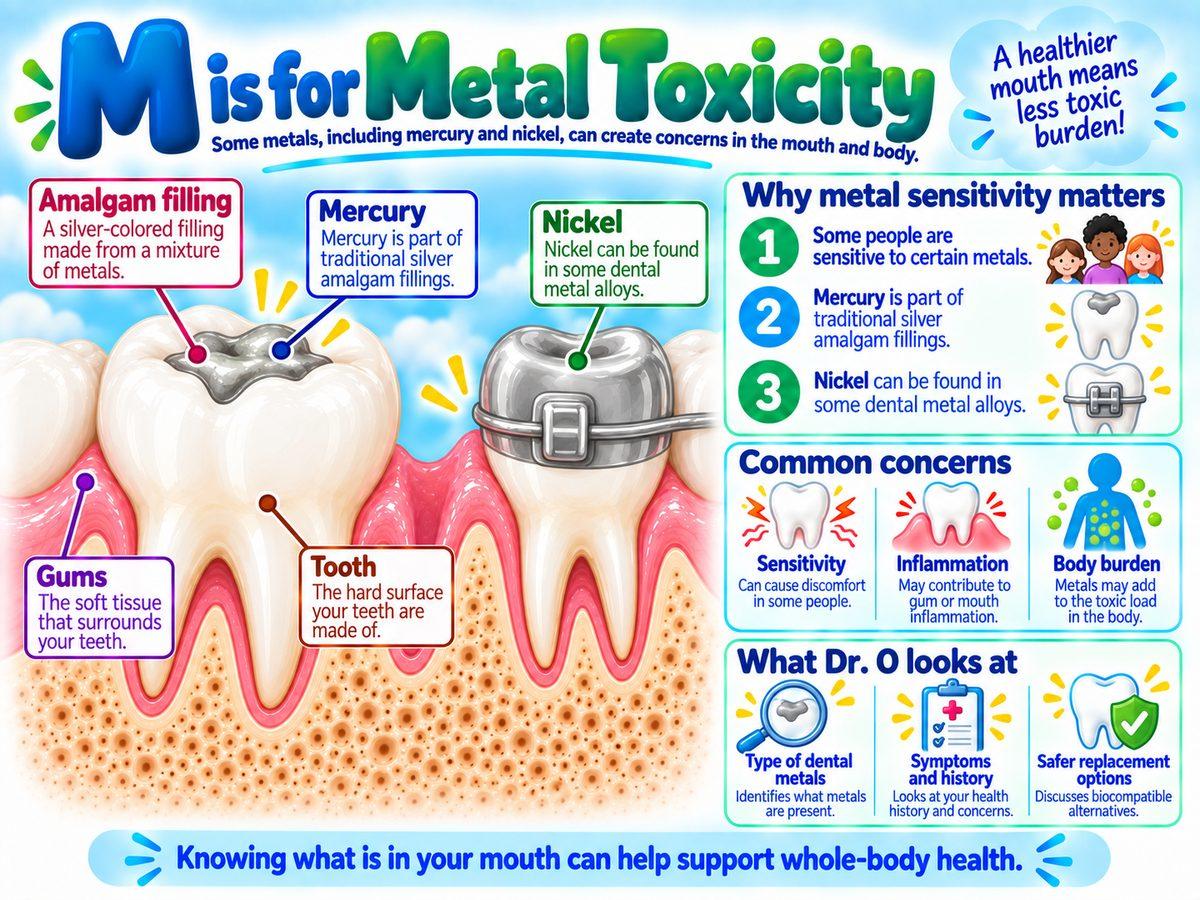
Dental metals can be part of a whole-mouth health discussion. Traditional silver amalgam fillings contain mercury, and some dental alloys can contain nickel; some people may also be sensitive to particular metals. Dr. O's approach looks at which metals are present, a person's symptoms and history, and whether more biocompatible replacement options should be considered.
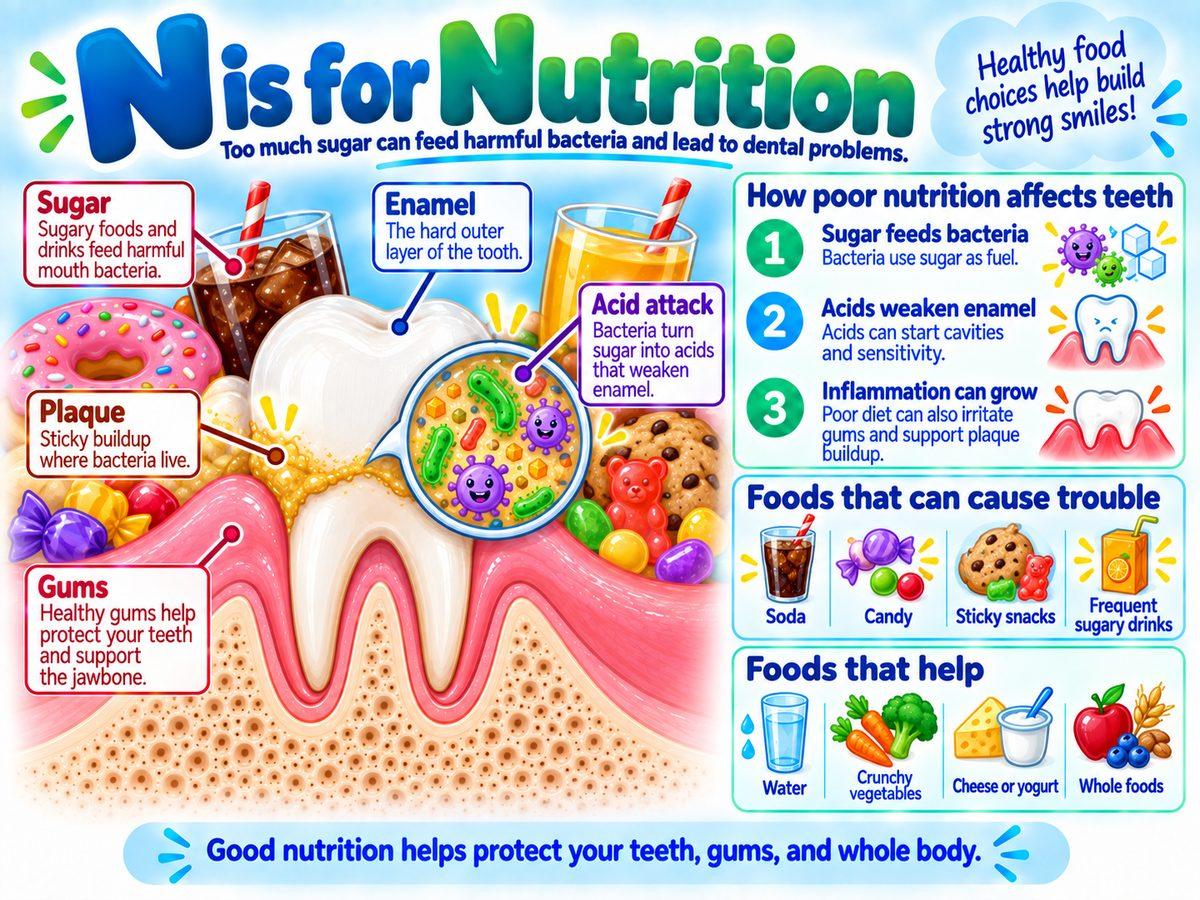
N is for Nutrition
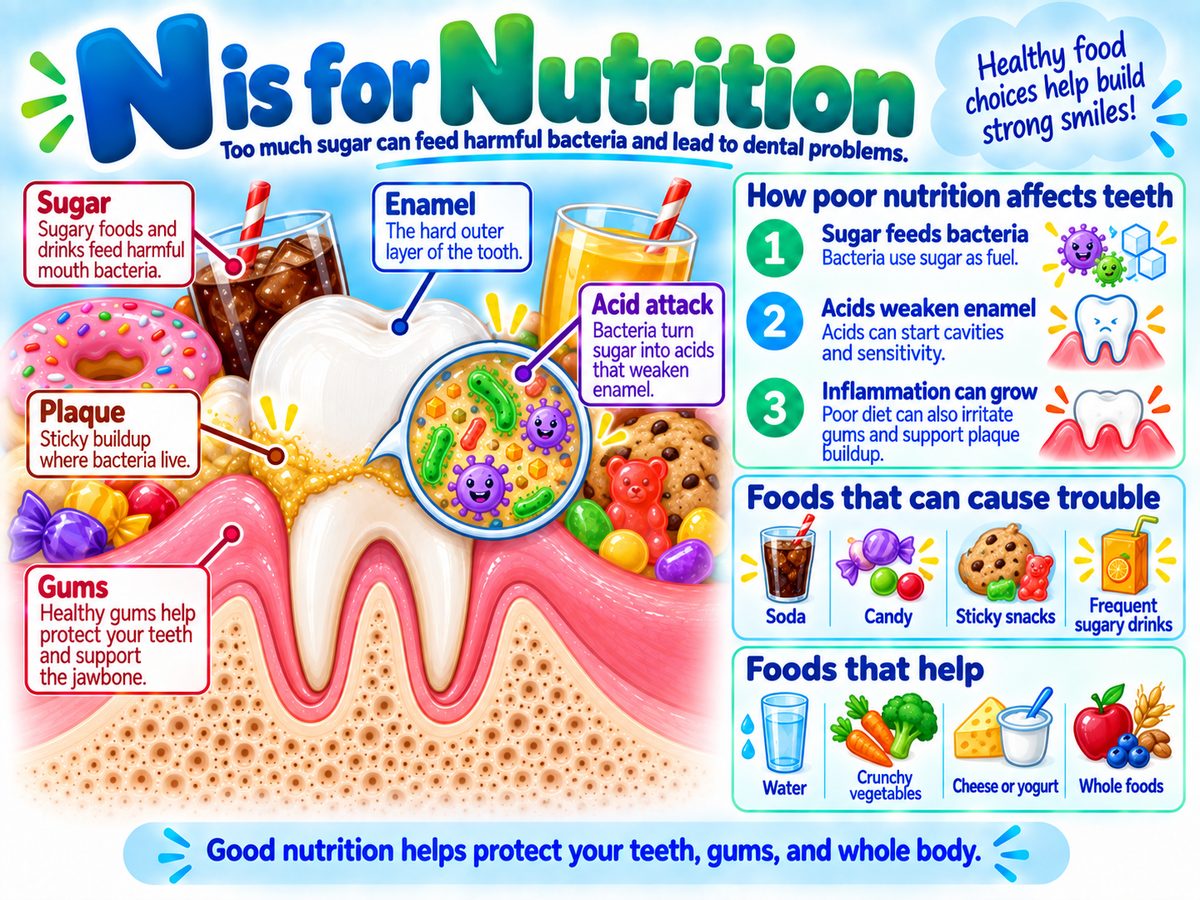
Nutrition has a direct effect on teeth and gums. Sugary foods and drinks feed harmful mouth bacteria, which produce acids that weaken enamel and encourage cavities; a poor diet can also support plaque buildup and gum irritation. Water, whole foods, vegetables, dairy foods such as cheese or yogurt, and other nutrient-rich choices help support a healthier mouth.
The Sugar Detective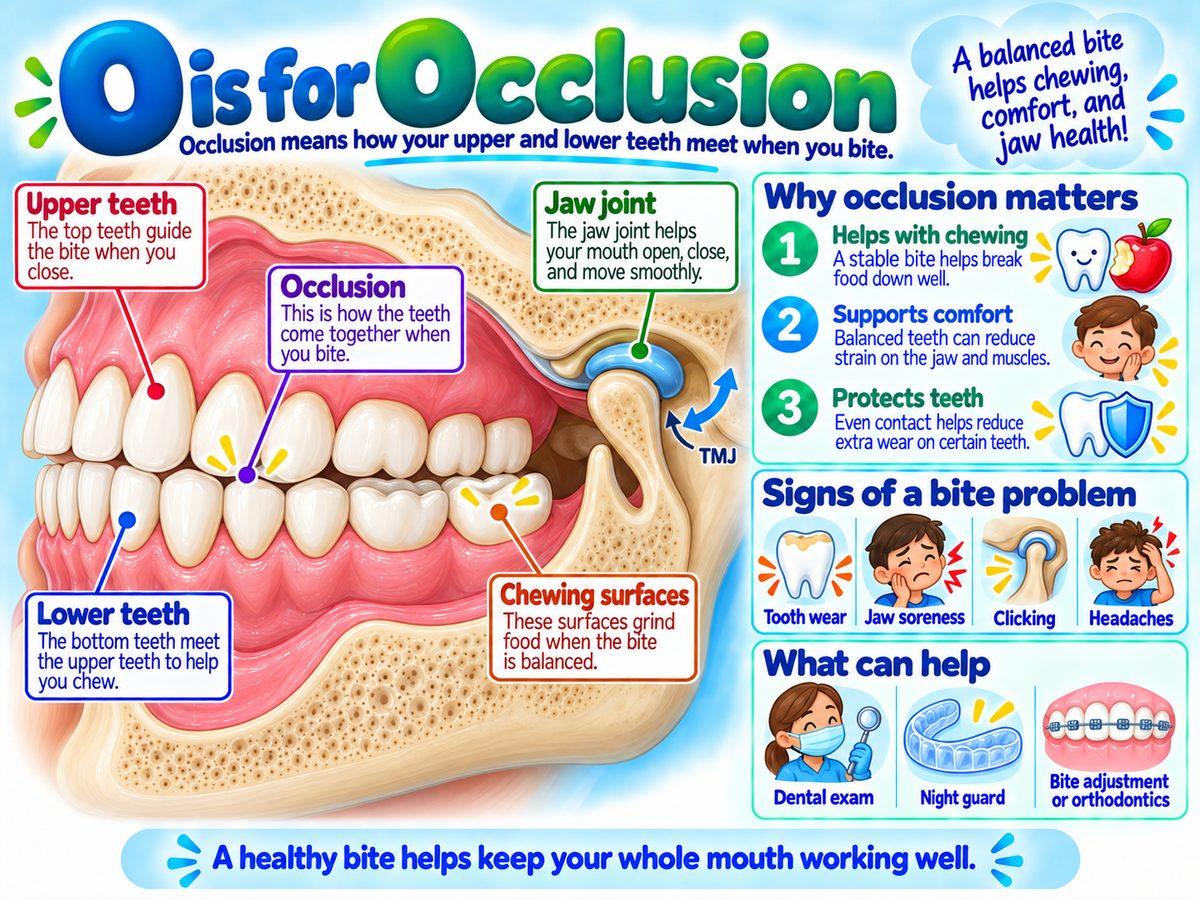
O is for Occlusion
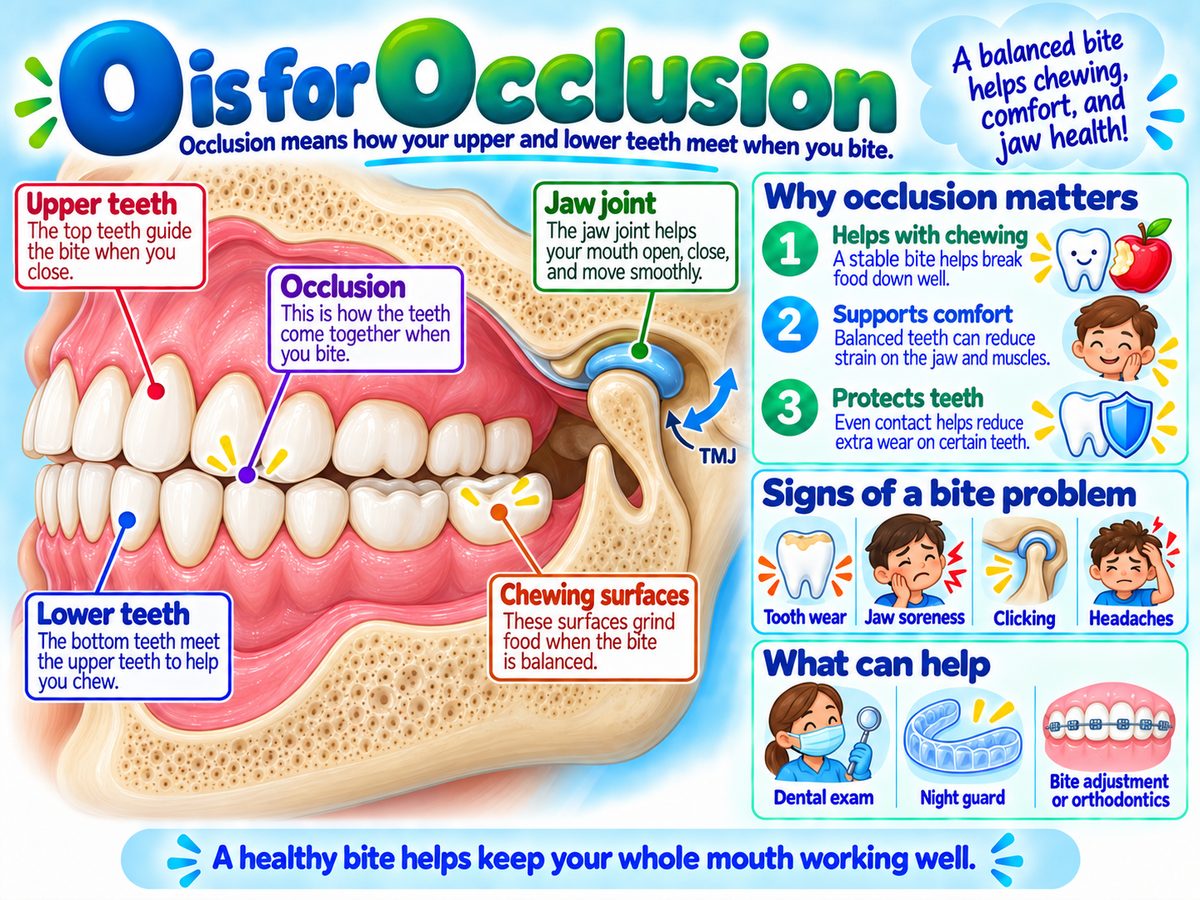
Occlusion is the way the upper and lower teeth meet when you bite. A balanced bite helps break food down efficiently, supports comfortable jaw movement, and spreads chewing forces more evenly across the teeth. Tooth wear, jaw soreness, clicking, headaches, or an uneven bite can be clues that the way the teeth meet deserves attention.
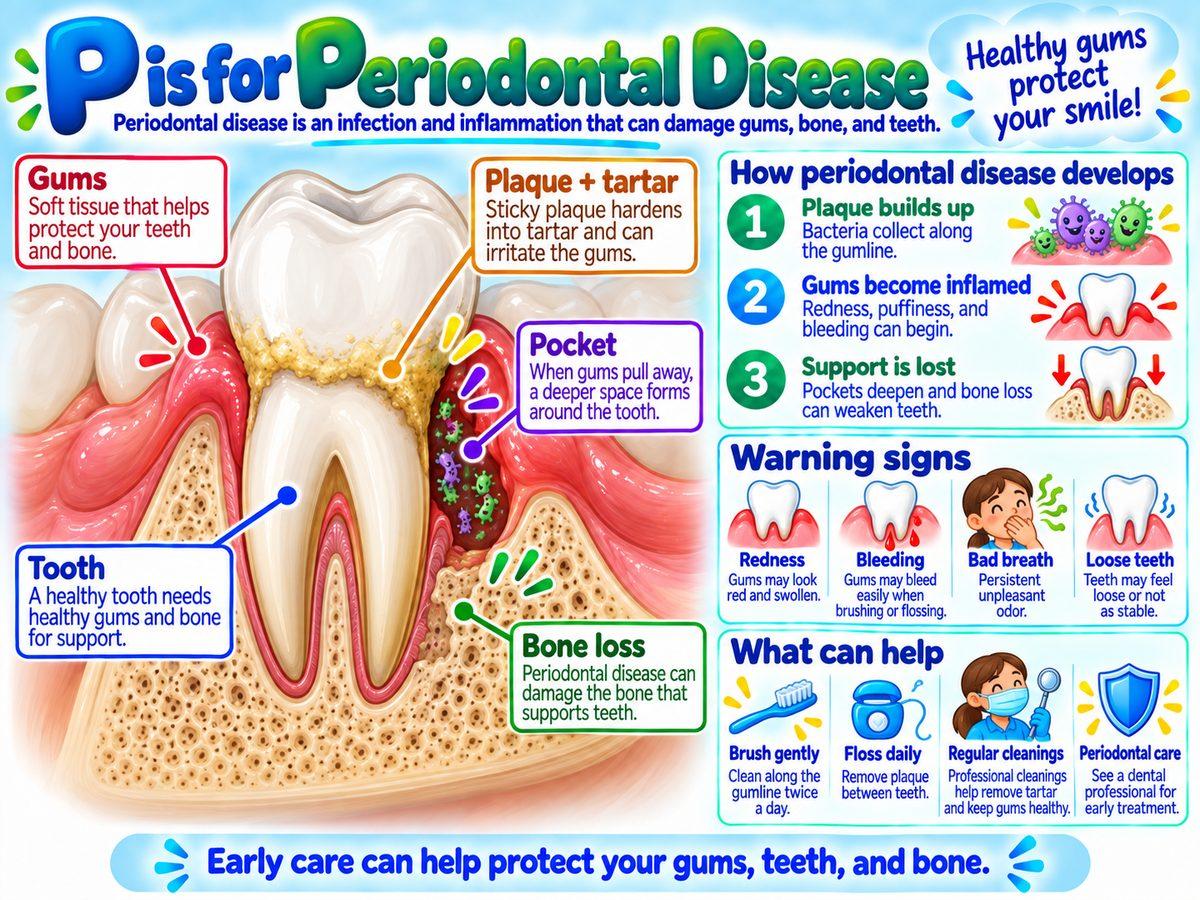
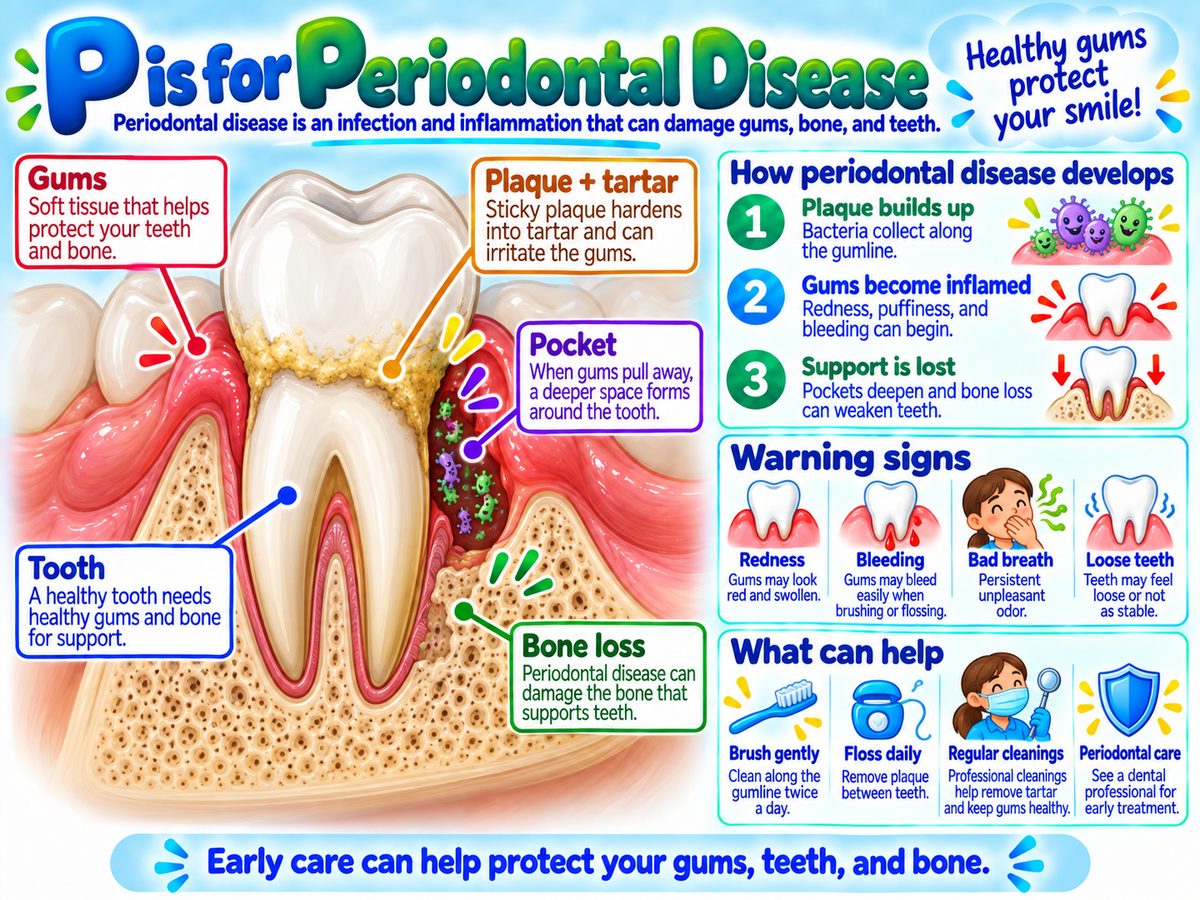
P is for Periodontal Disease
Periodontal disease is infection and inflammation that can damage the gums, supporting bone, and eventually the teeth. Plaque collects along the gumline, hardens into tartar, and can lead to bleeding, deeper gum pockets, bone loss, bad breath, and loose teeth. Early care, effective home cleaning, regular cleanings, and periodontal treatment can help protect the tissues that hold teeth in place.
Healthier Gums in 30 Days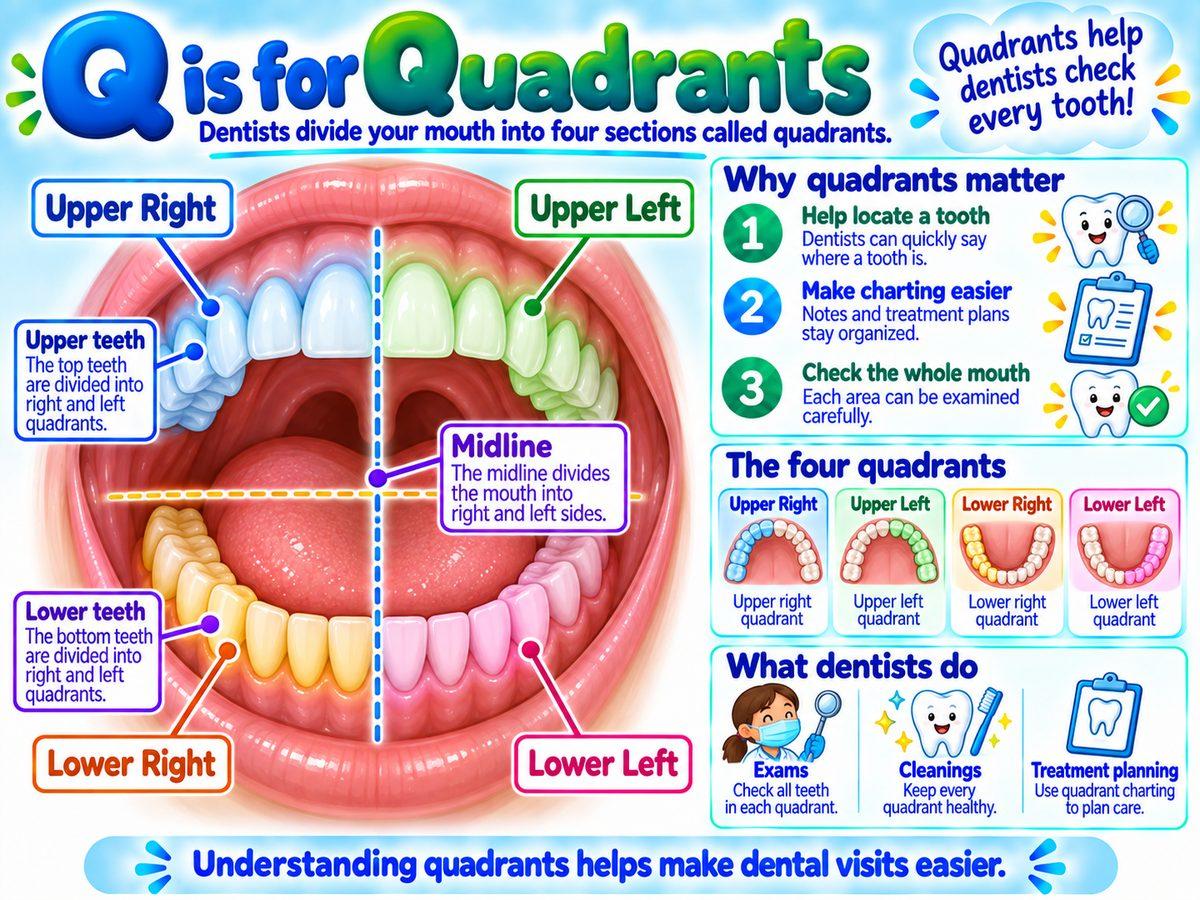
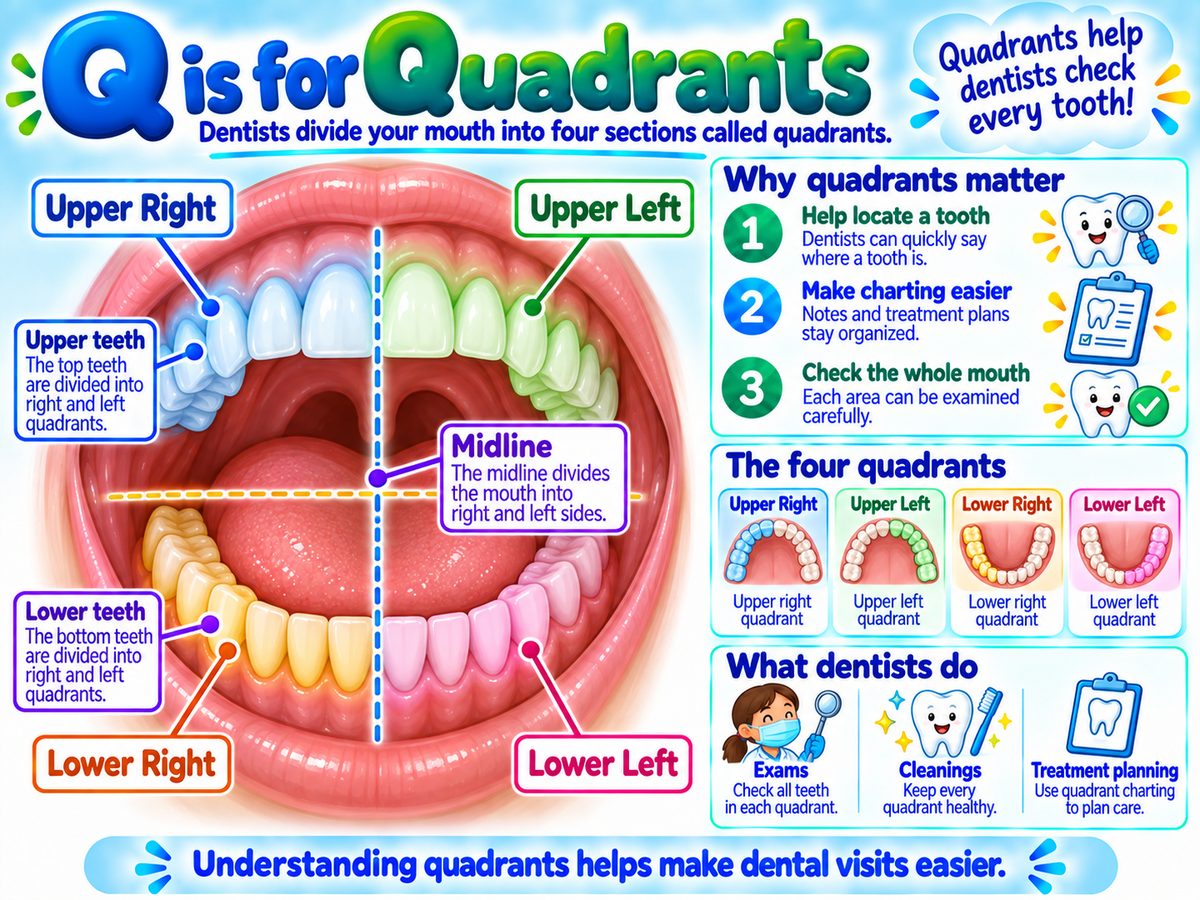
Q is for Quadrants
Dentists divide the mouth into four quadrants: upper right, upper left, lower right, and lower left. This makes it easier to locate a tooth, organize charting, examine the whole mouth, and plan treatment. Quadrants are simply a practical map for talking about where something is happening.
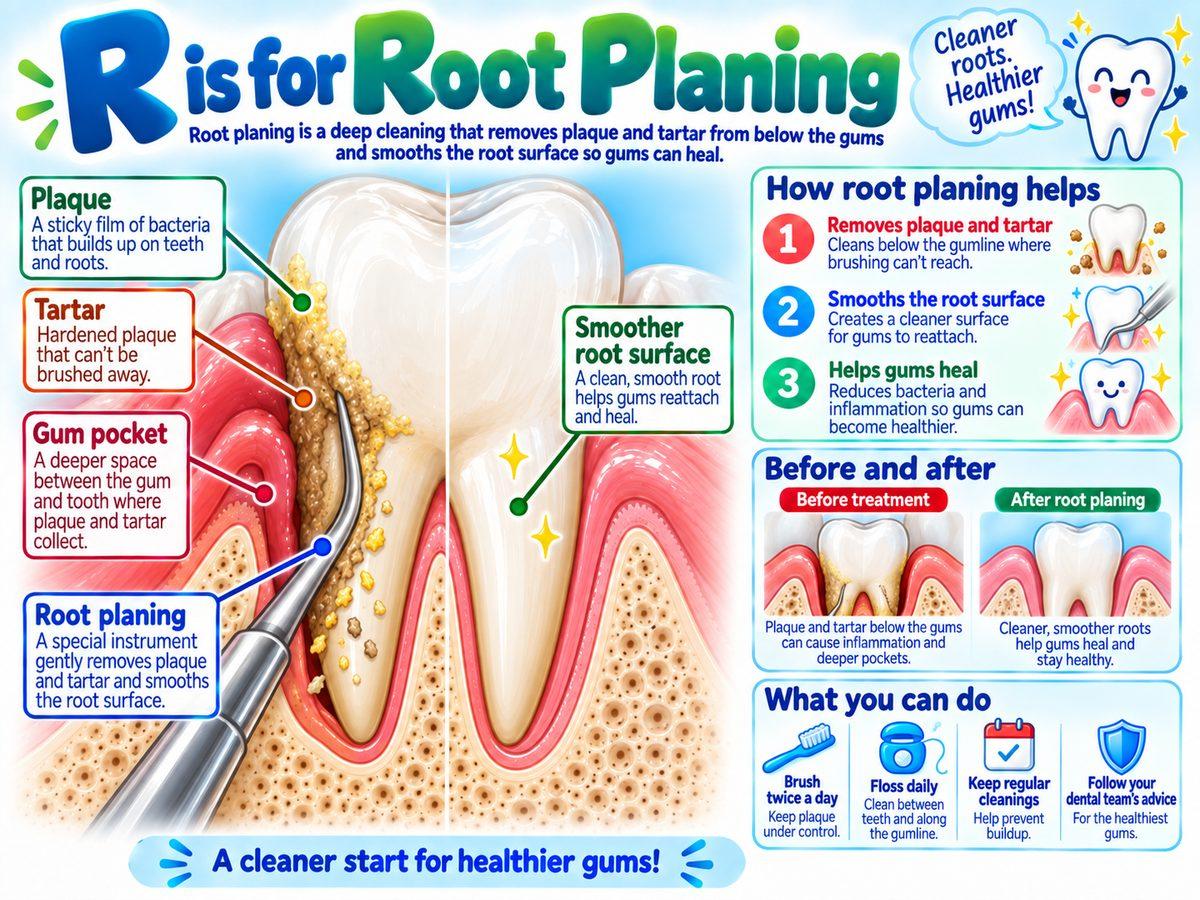
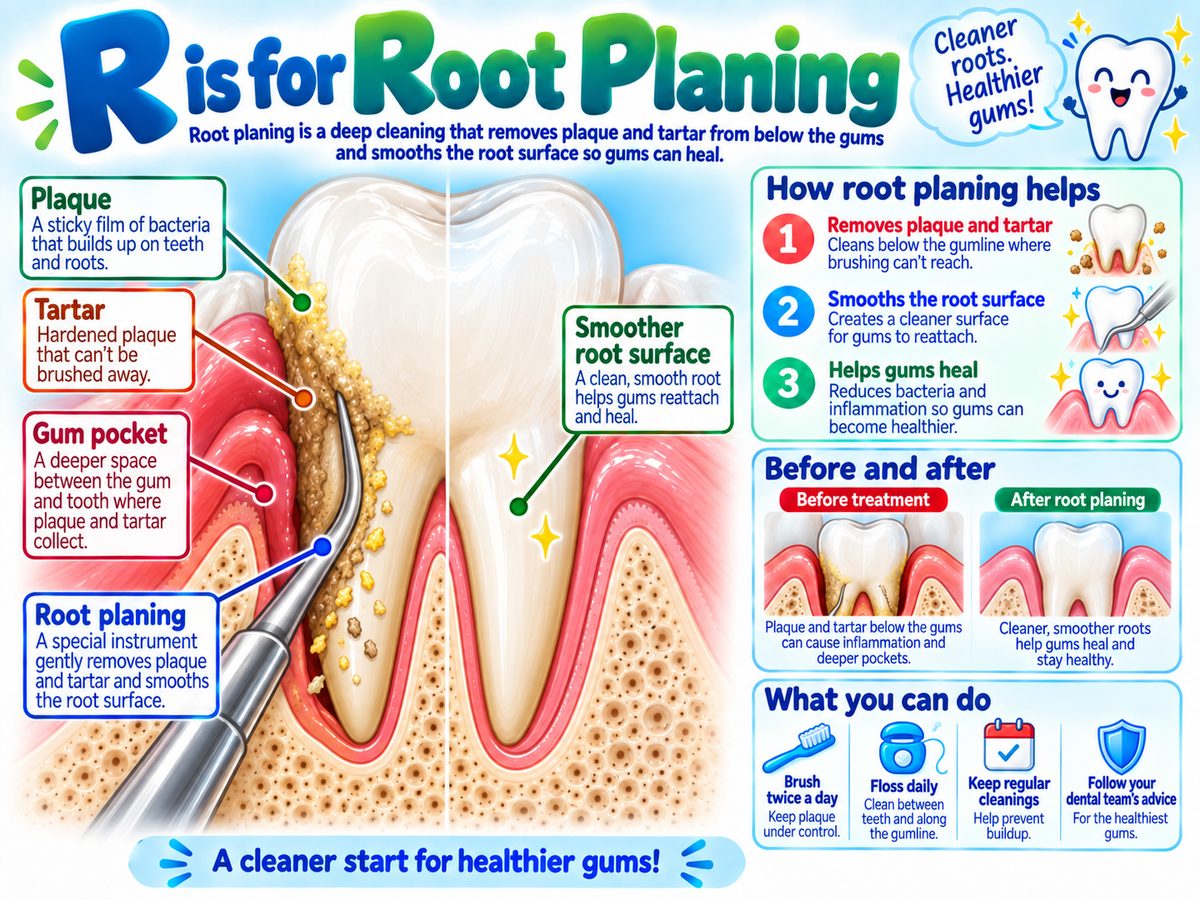
R is for Root Planing
Root planing is a deep-cleaning procedure used when gum disease has created pockets around the teeth. After plaque and tartar are removed, the dentist or hygienist smooths the root surfaces so the gums can heal and fit more closely around the teeth. Daily brushing, careful cleaning between the teeth, and regular periodontal care help protect the results.
Do I Really Need Root Planing?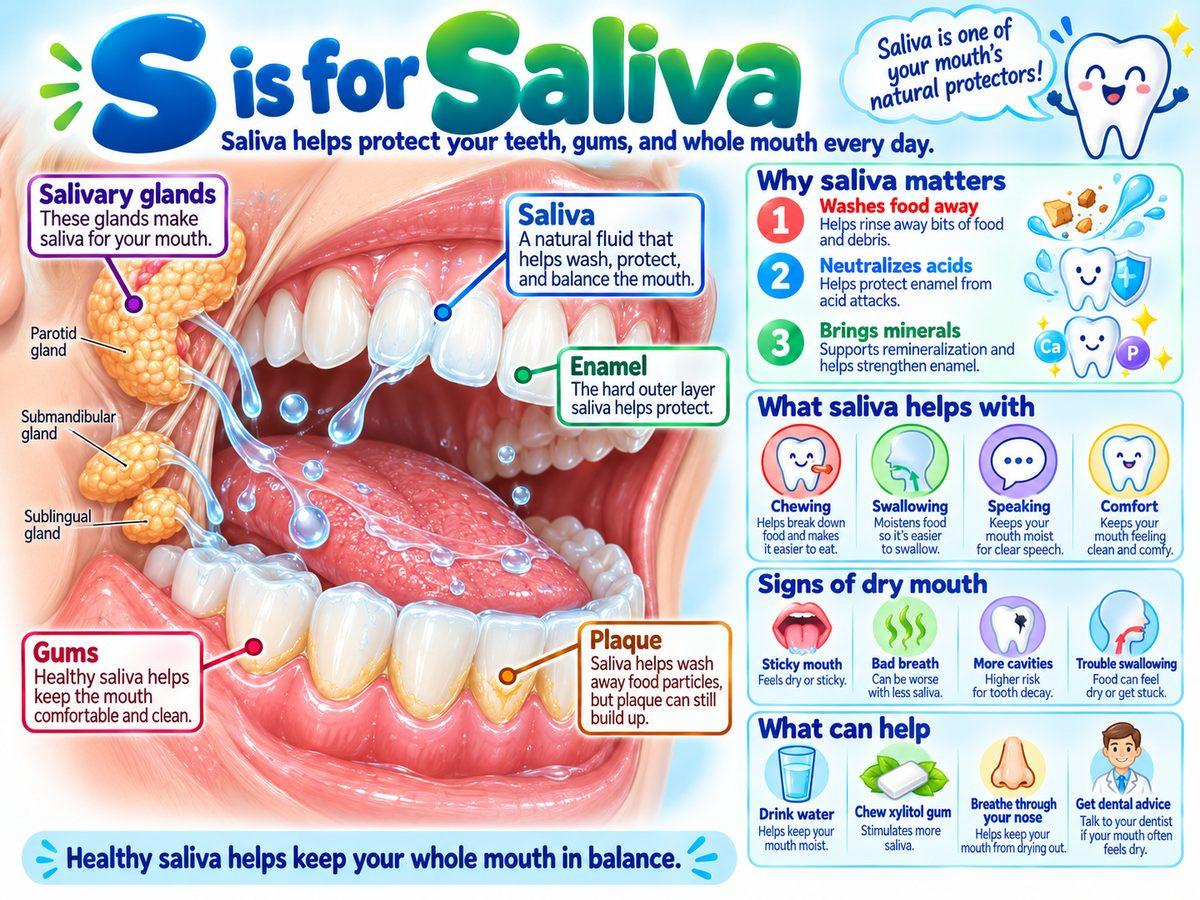
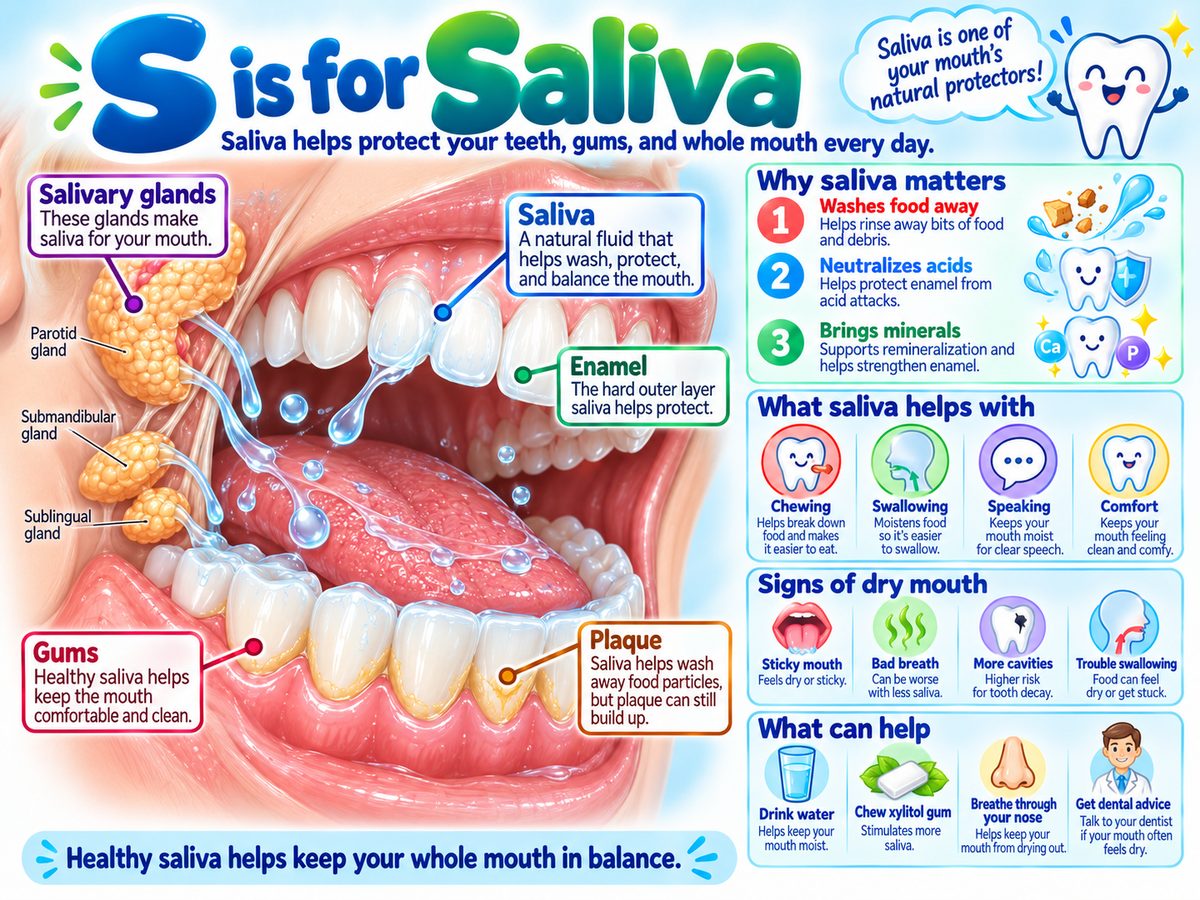
S is for Saliva
Saliva is one of the mouth's natural protectors. Made by the salivary glands, it washes away food particles, helps neutralize acids, keeps the tissues moist, and brings minerals that support enamel remineralization. When saliva is reduced, the mouth may feel sticky or dry and the risks of bad breath, swallowing difficulty, and tooth decay can increase.
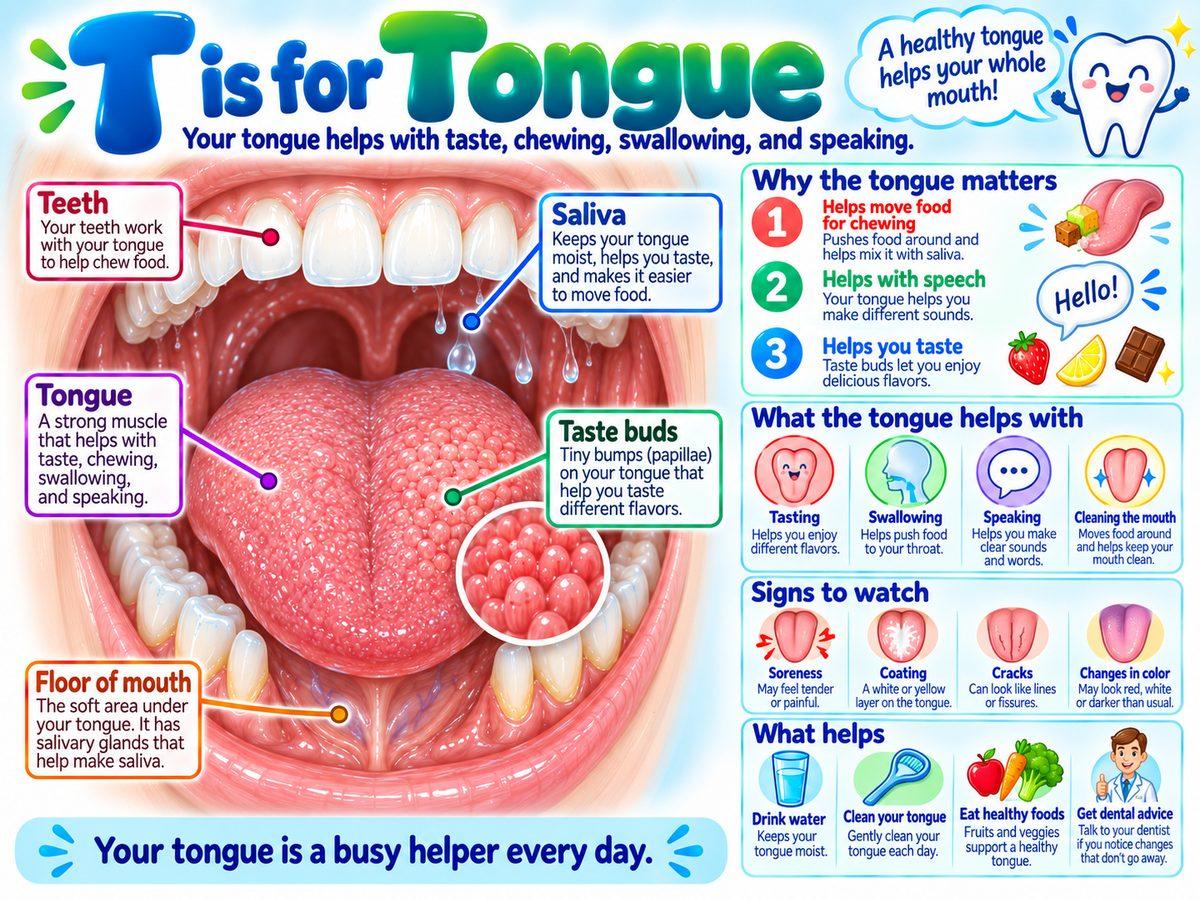
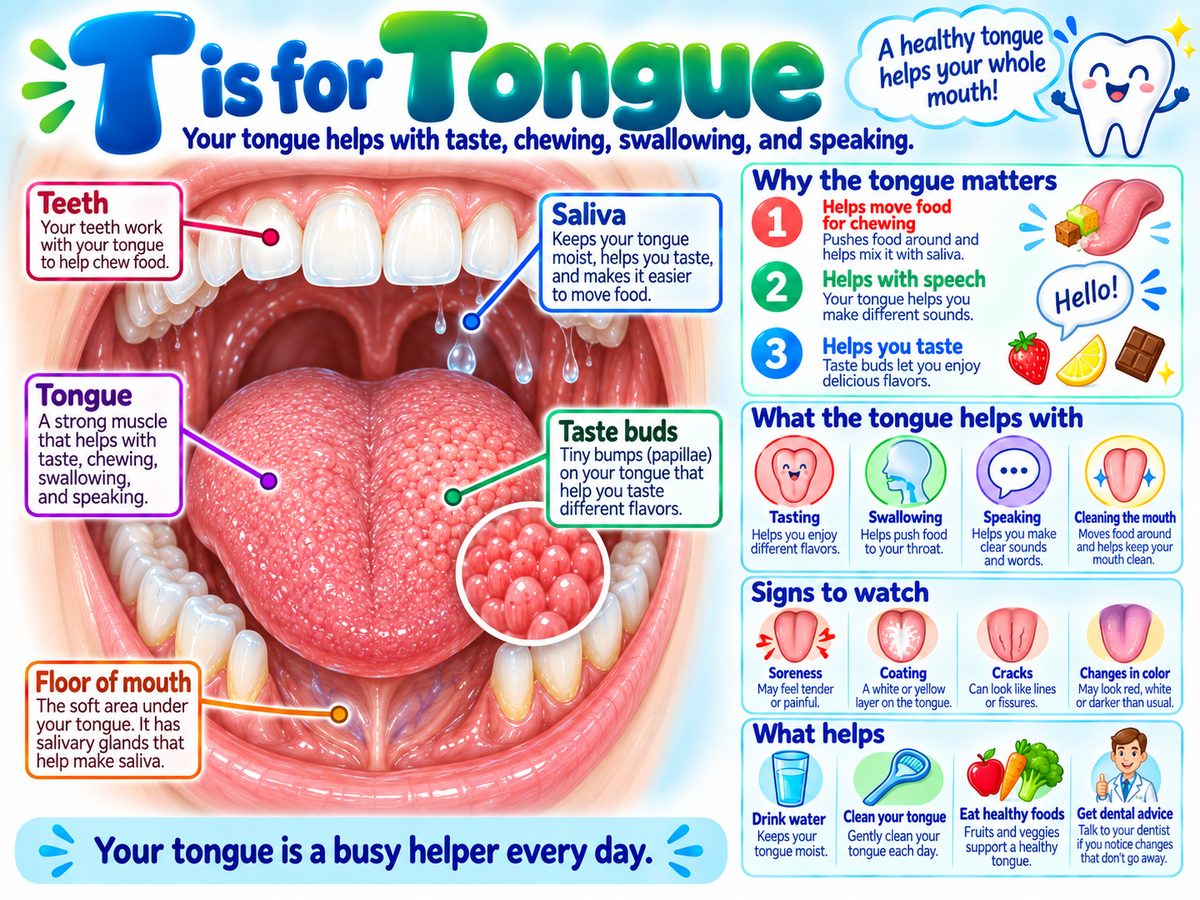
T is for Tongue
The tongue is a strong, busy muscle involved in taste, chewing, swallowing, speaking, and moving food around the mouth. Its surface contains papillae and taste buds, while saliva keeps it moist and helps with taste and swallowing. Persistent soreness, a heavy coating, cracks, or unusual color changes are worth discussing with a dental professional.
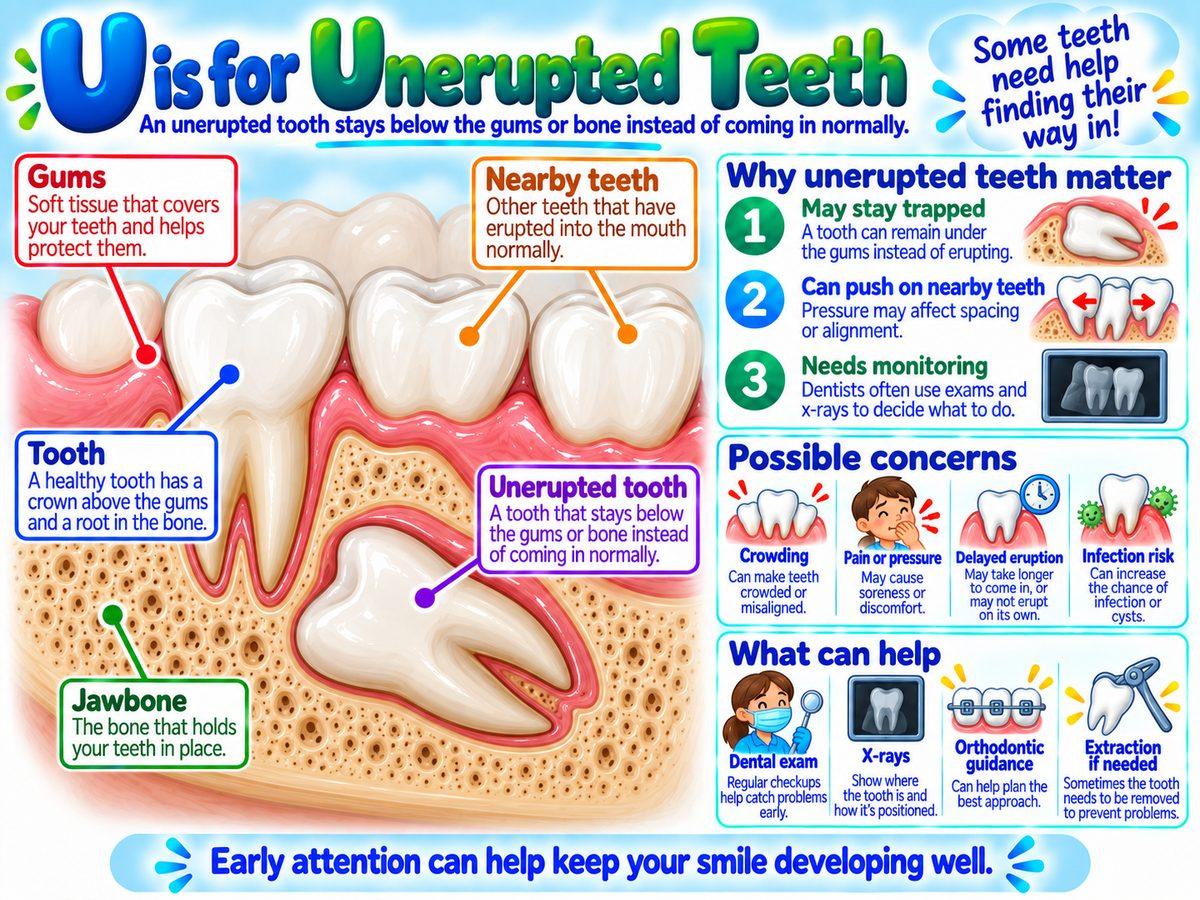
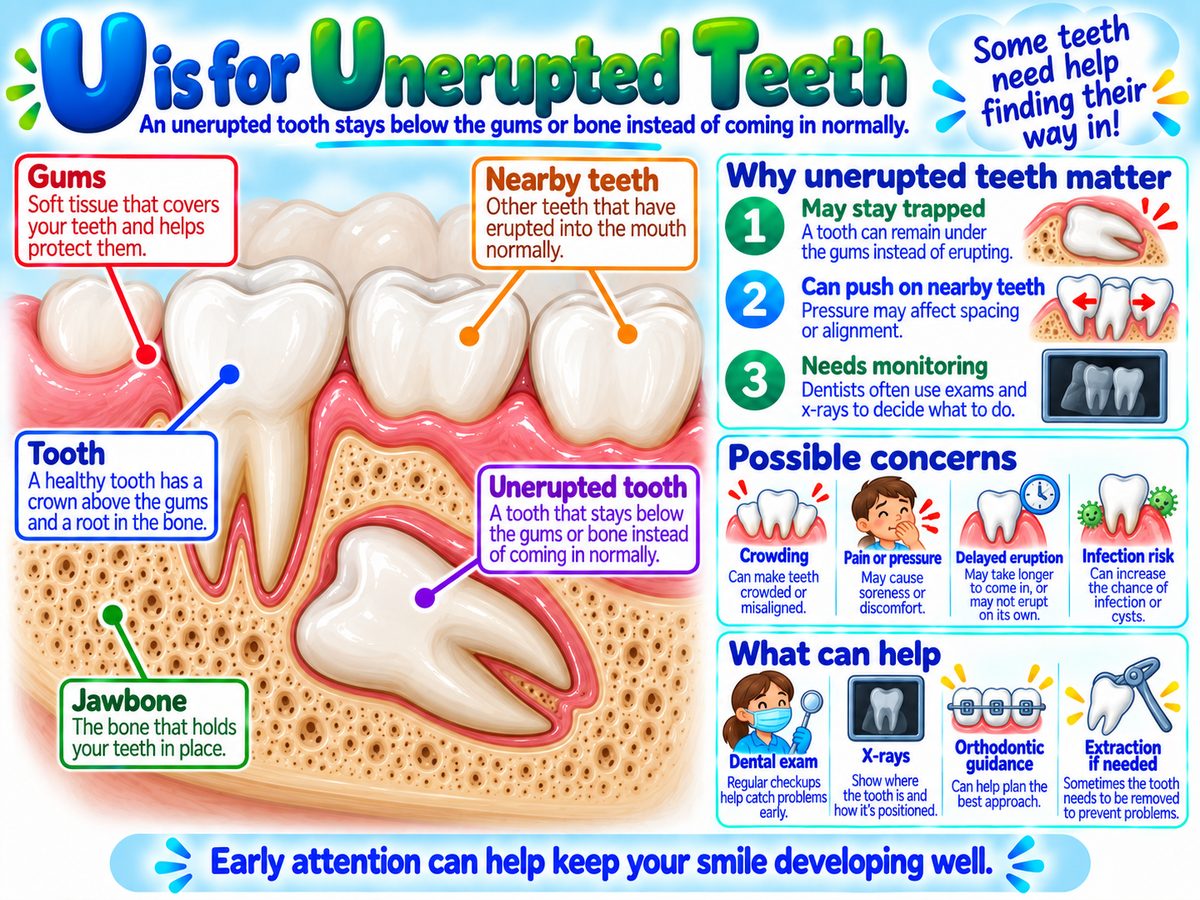
U is for Unerupted Teeth
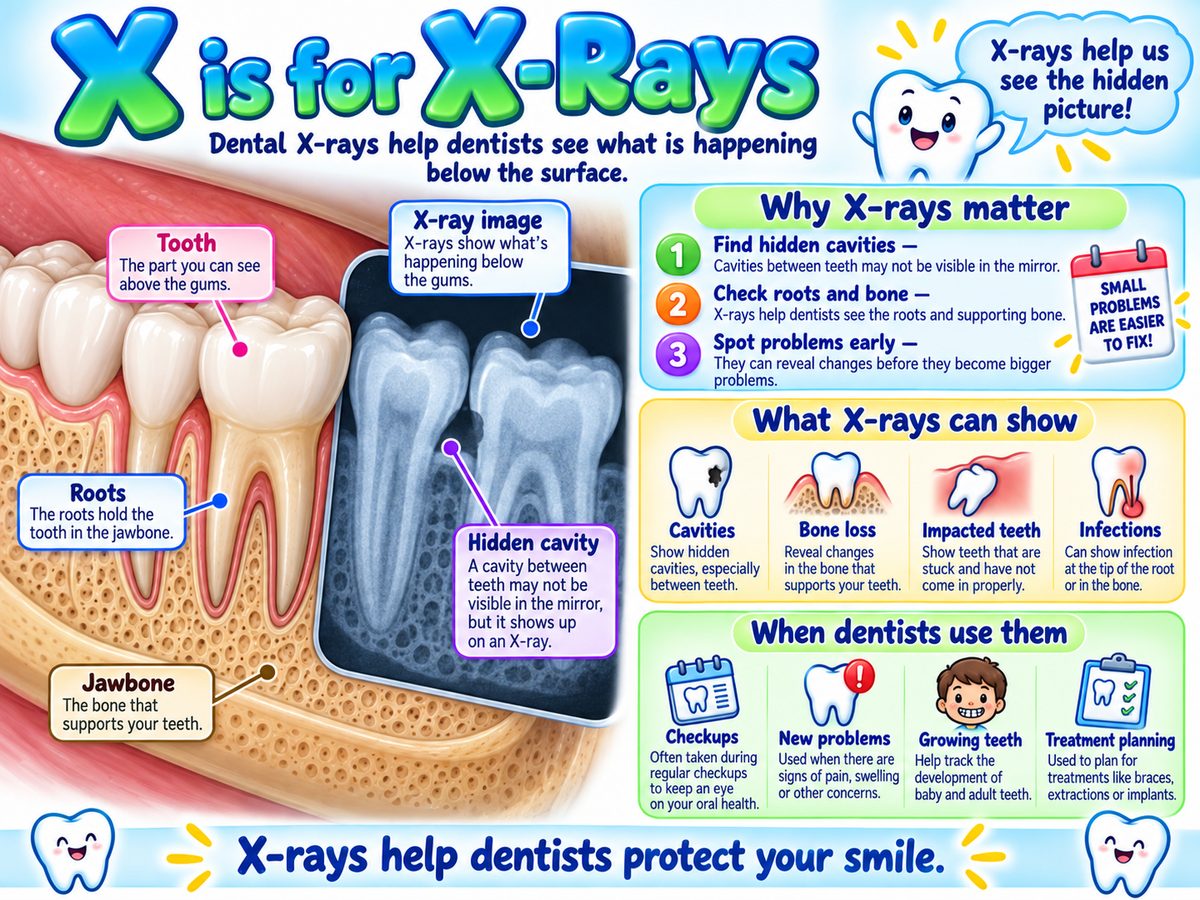
An unerupted tooth remains below the gums or within the jawbone instead of coming into the mouth normally. It may stay trapped, press on nearby teeth, contribute to crowding or discomfort, or take longer than expected to appear. Dental exams and X-rays help show where the tooth is and whether it should simply be monitored or needs treatment.
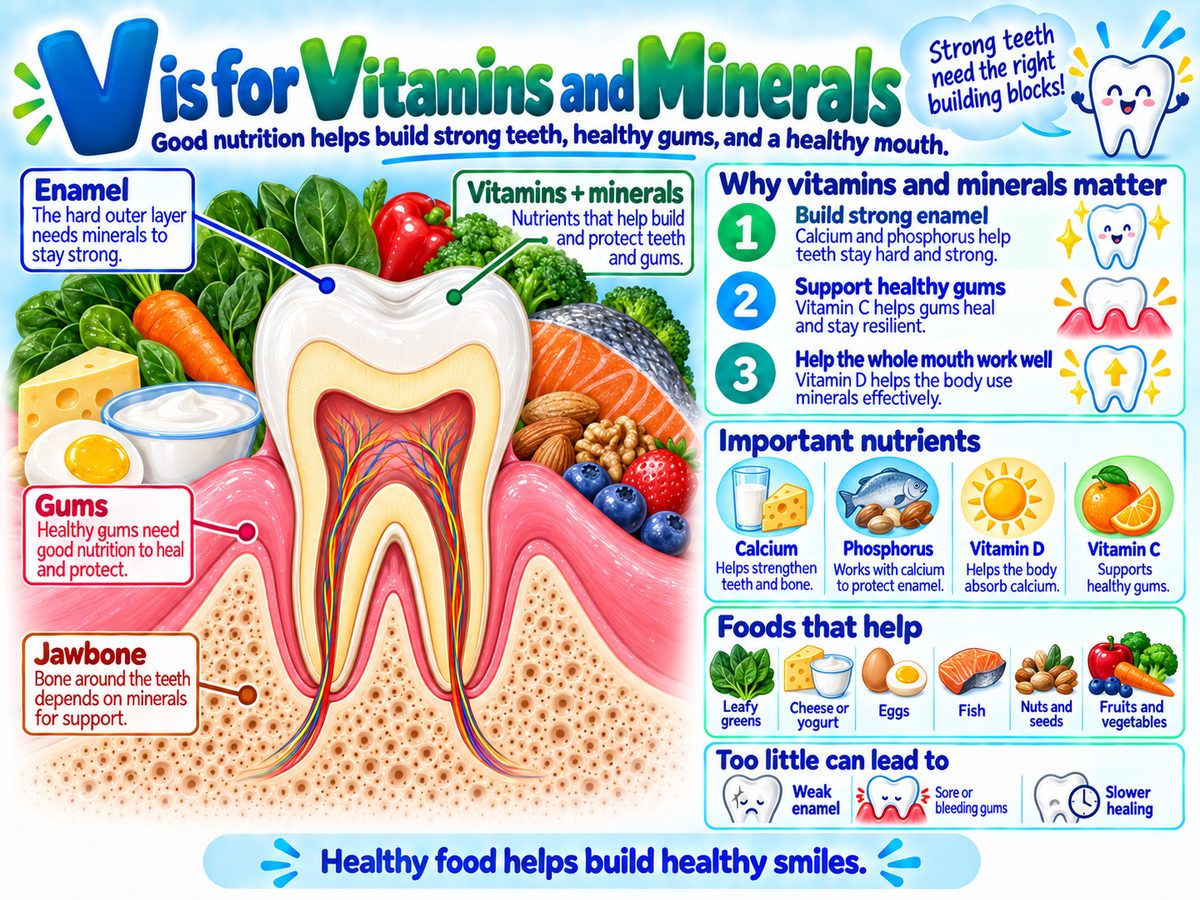
V is for Vitamins and Minerals
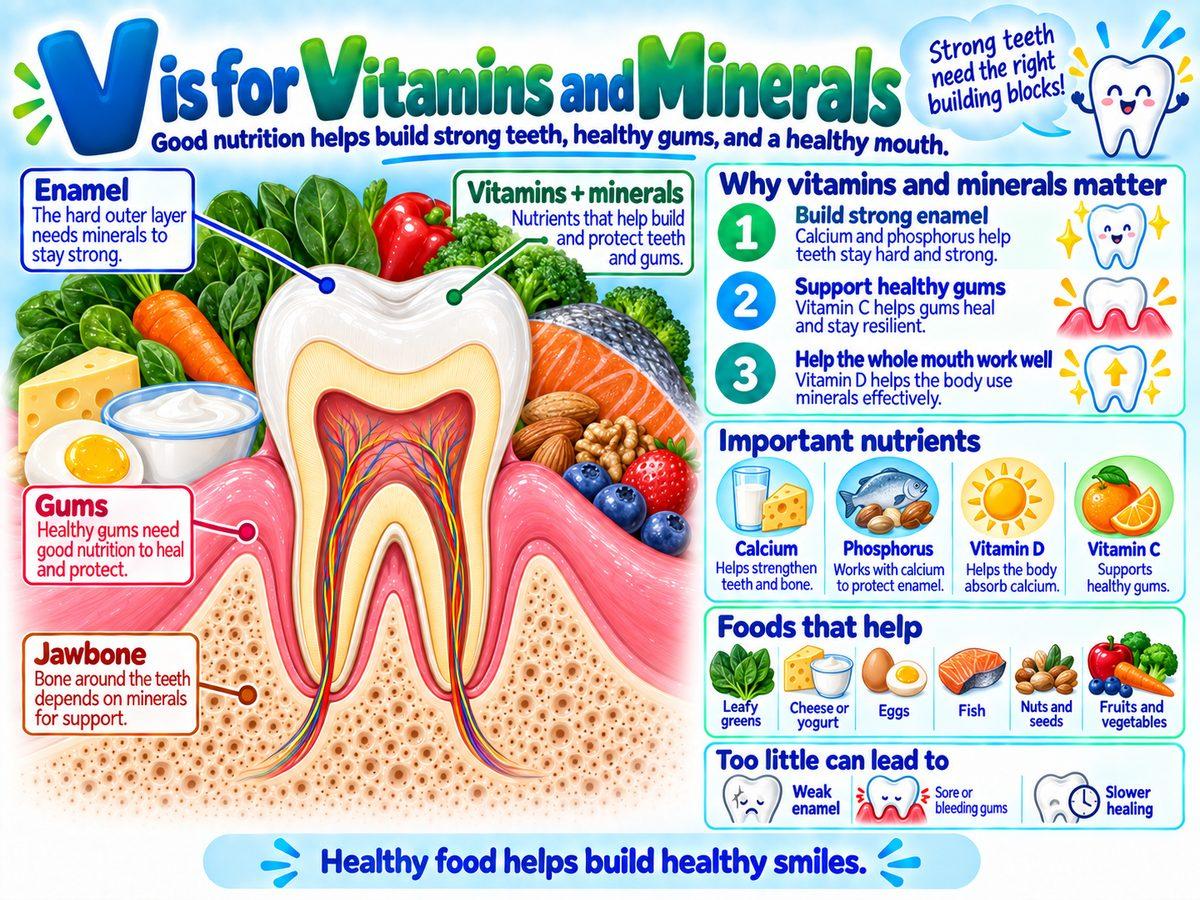
Teeth, gums, and jawbone need nutritional building blocks. Calcium and phosphorus help keep enamel and bone strong, vitamin D helps the body use calcium effectively, and vitamin C supports healthy gum tissue. A varied diet that includes leafy greens, dairy foods, eggs, fish, nuts, seeds, fruits, and vegetables supports the mouth as well as the rest of the body.
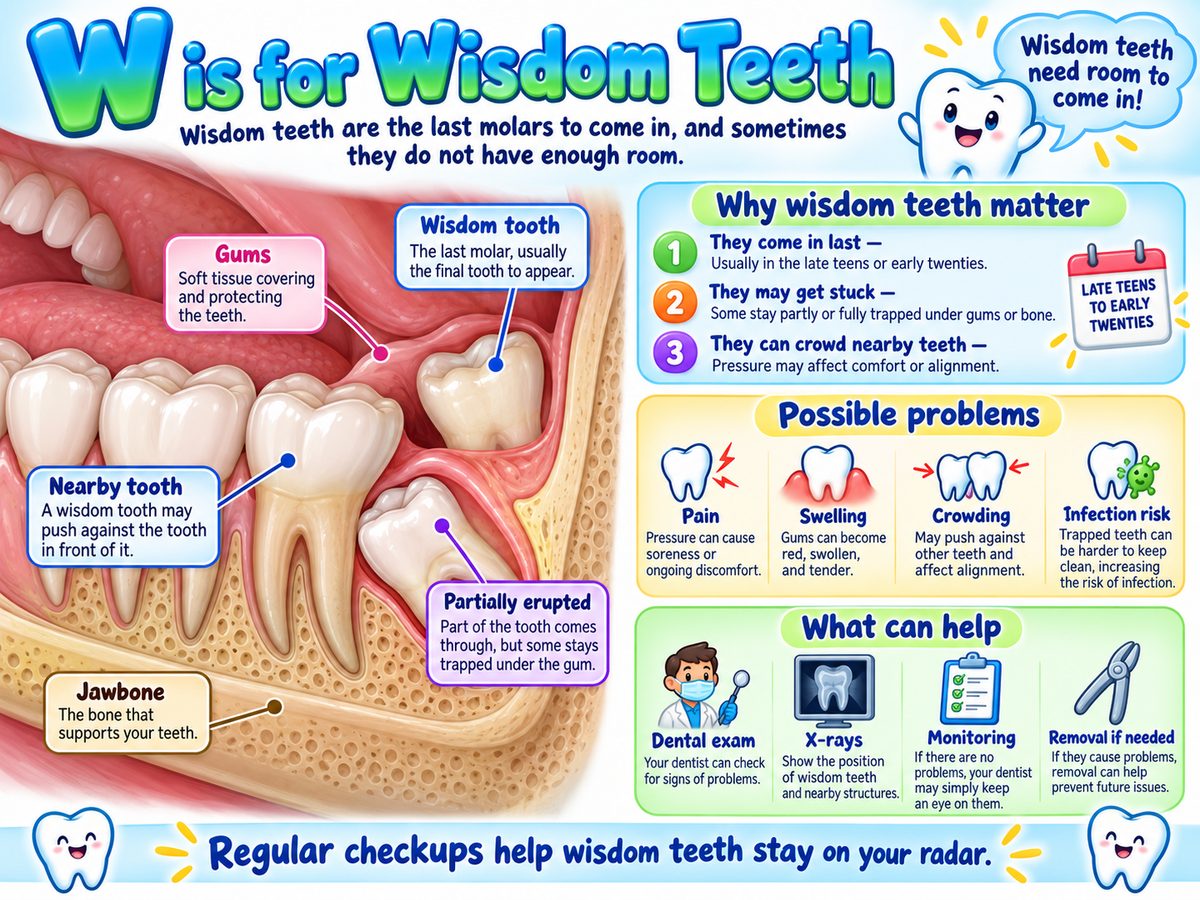
W is for Wisdom Teeth
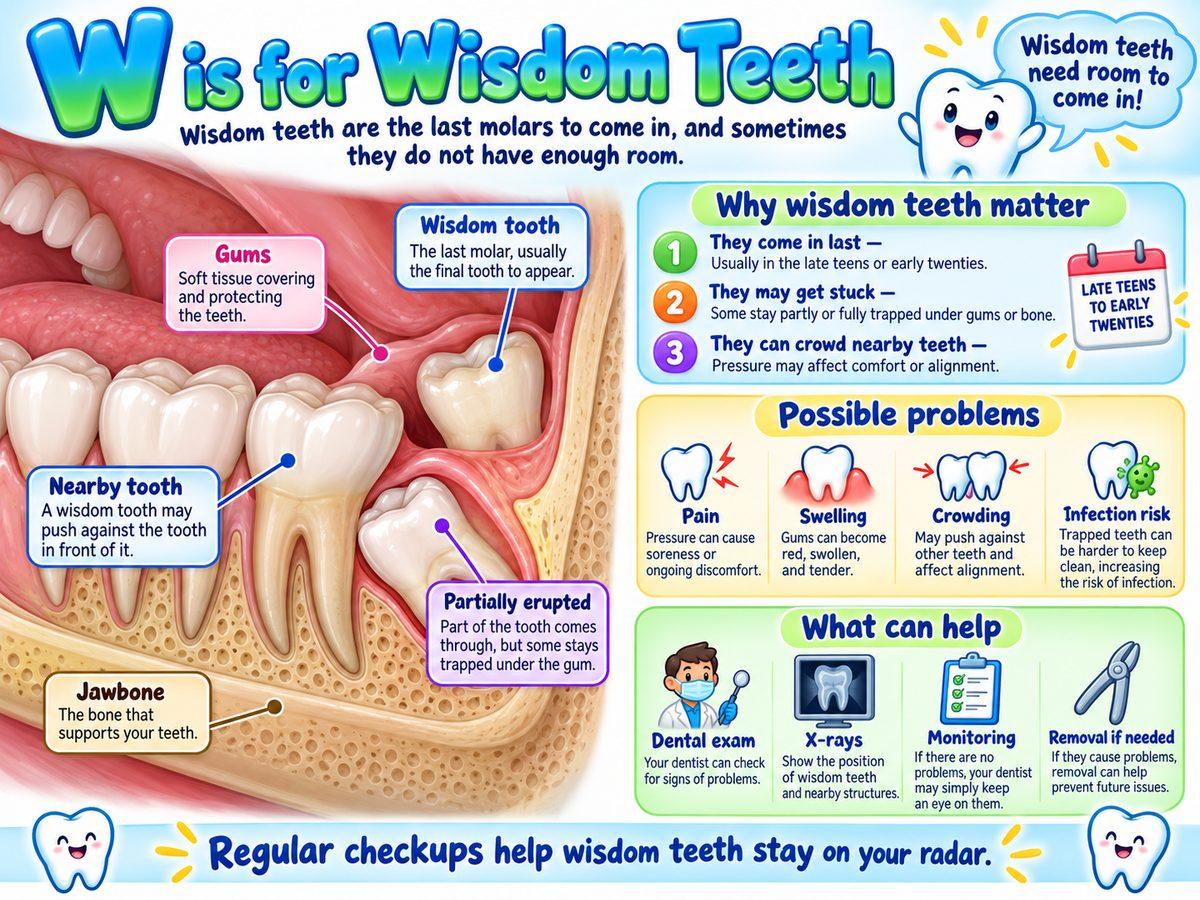
Wisdom teeth are the last molars to come in, usually in the late teens or early twenties. Sometimes there is not enough room, so a wisdom tooth may stay trapped, erupt only partly, crowd nearby teeth, or become difficult to keep clean. Exams and X-rays help determine whether the teeth can be monitored or whether removal is the better option.
X is for X-Rays
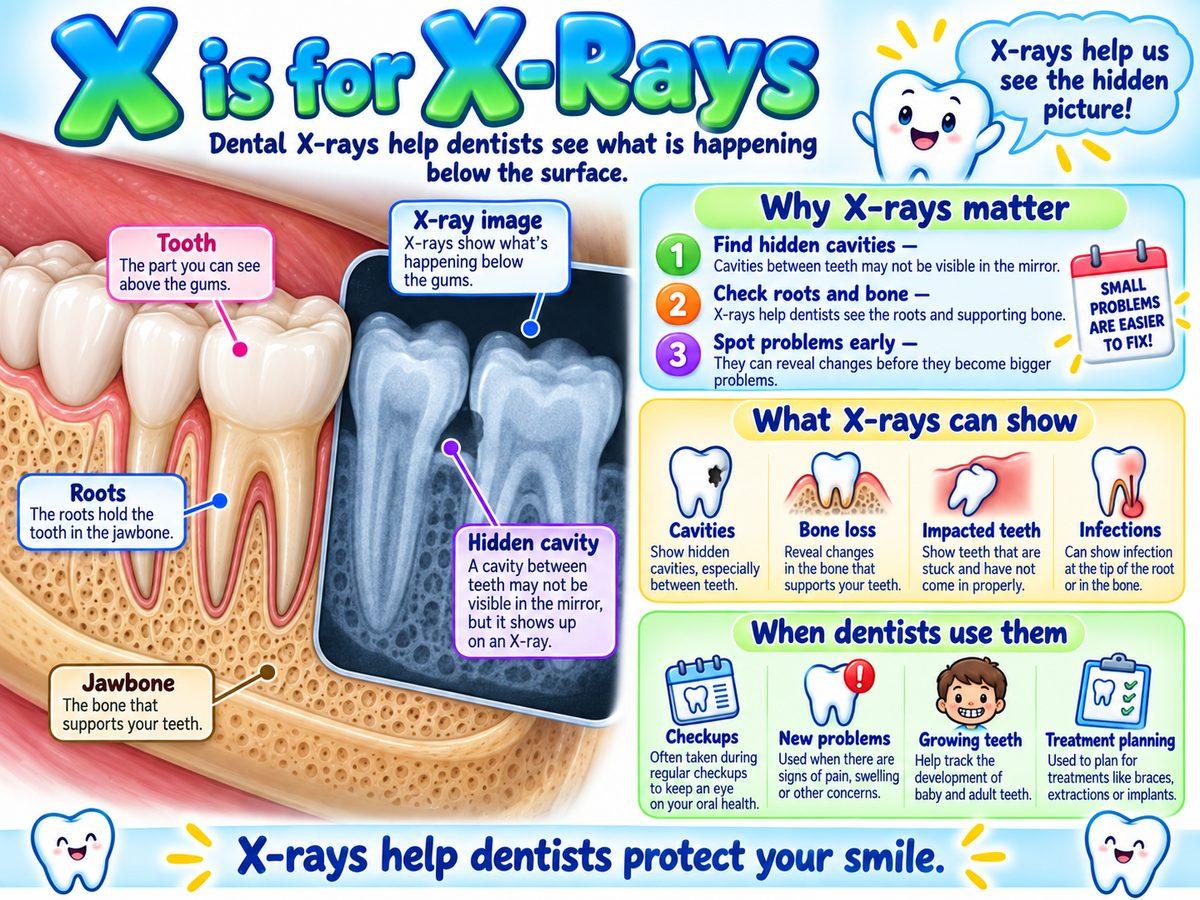
Dental X-rays let dentists see below the surface. They can reveal cavities between teeth, changes in the supporting bone, problems around roots, infections, impacted or developing teeth, and other findings that may not be visible during an ordinary exam. They are especially useful for finding small problems early and for planning treatment.
Y is for Yeast
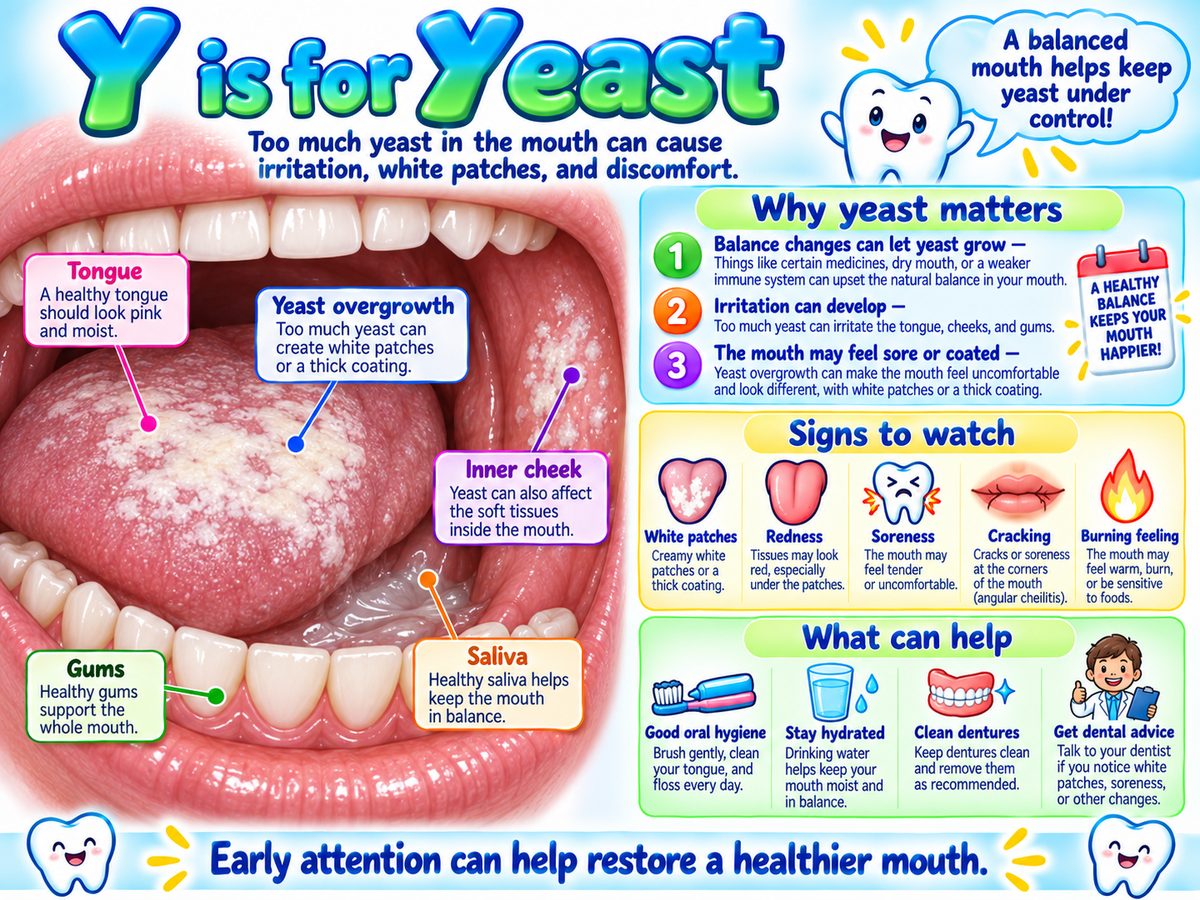
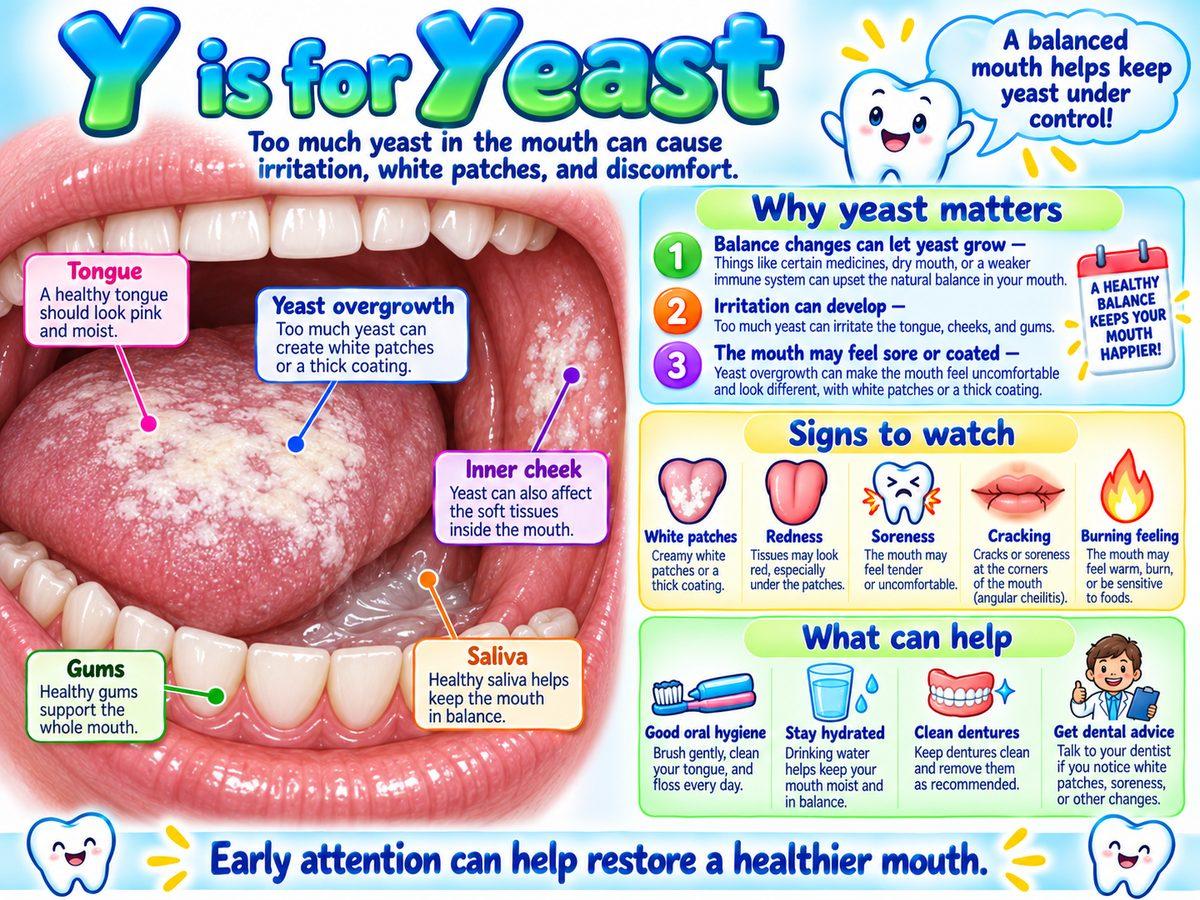
Yeast normally lives in the mouth in small amounts, but an overgrowth can upset the oral balance. Too much yeast can produce creamy white patches or a thick coating, redness, soreness, cracking at the corners of the mouth, or a burning sensation. Medicines, dry mouth, dentures, or a weakened immune system can contribute to that imbalance, so persistent changes should be evaluated.
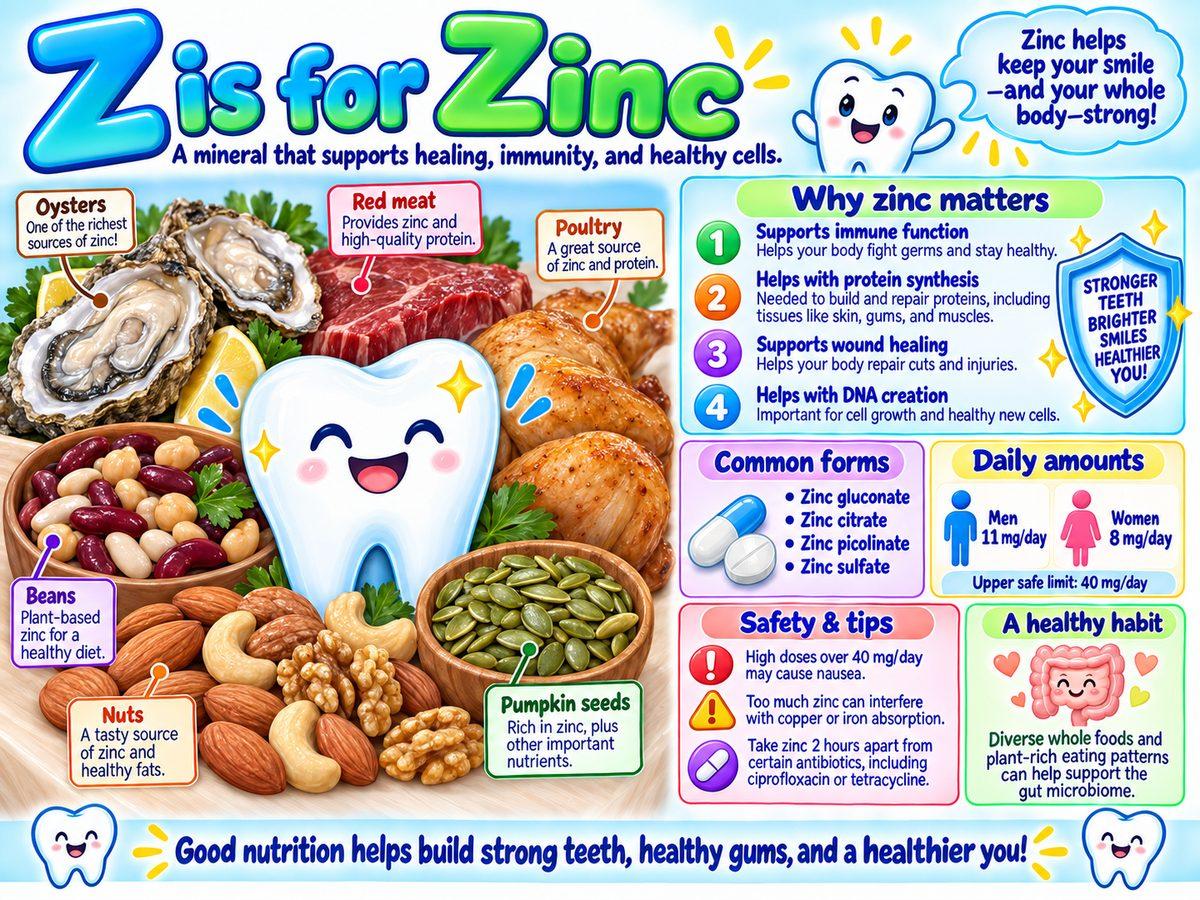
Z is for Zinc
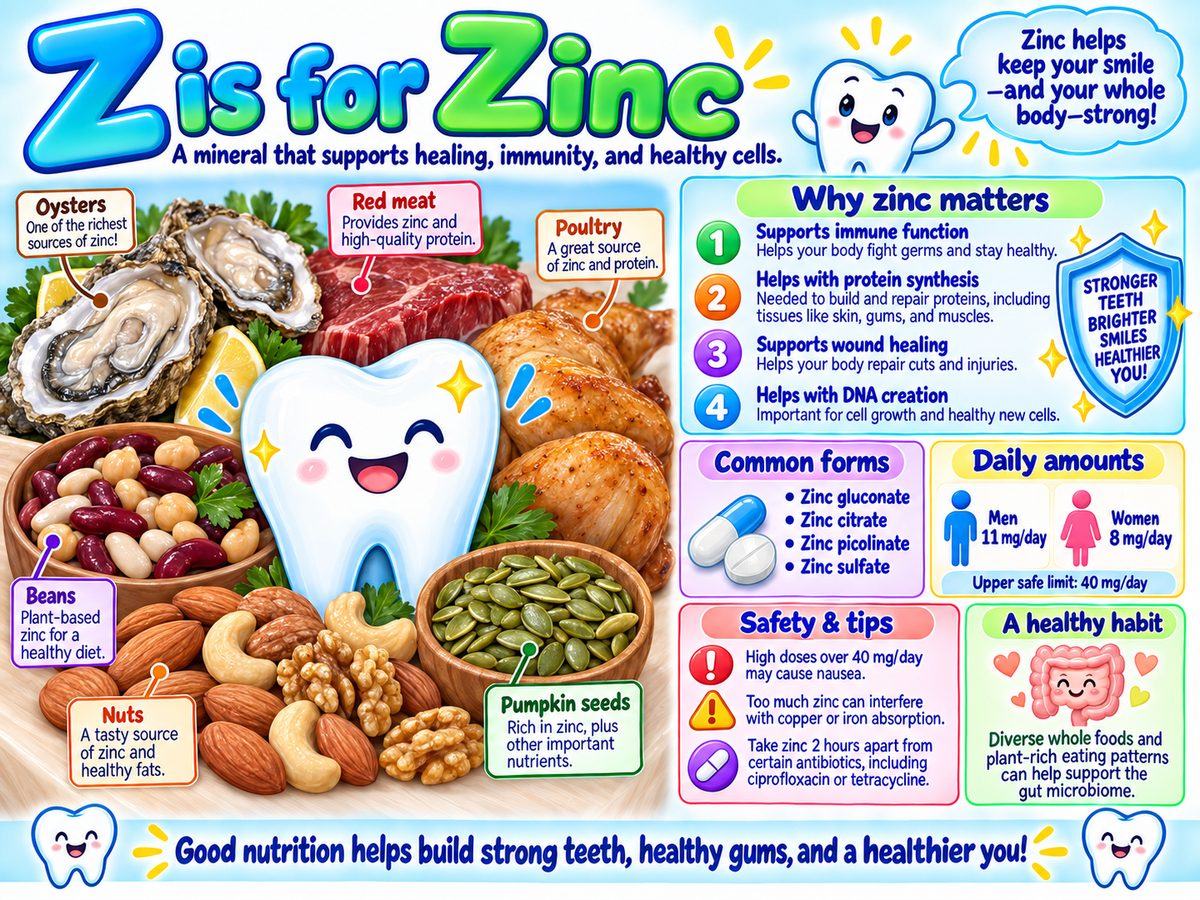
Zinc is a mineral that supports immune function, protein synthesis, wound healing, and the creation of new cells and DNA. Foods such as oysters, red meat, poultry, beans, nuts, and pumpkin seeds are good sources. Adult men generally need 11 mg a day and adult women 8 mg a day; more is not always better, and amounts over 40 mg daily can cause nausea and may interfere with copper or iron absorption.